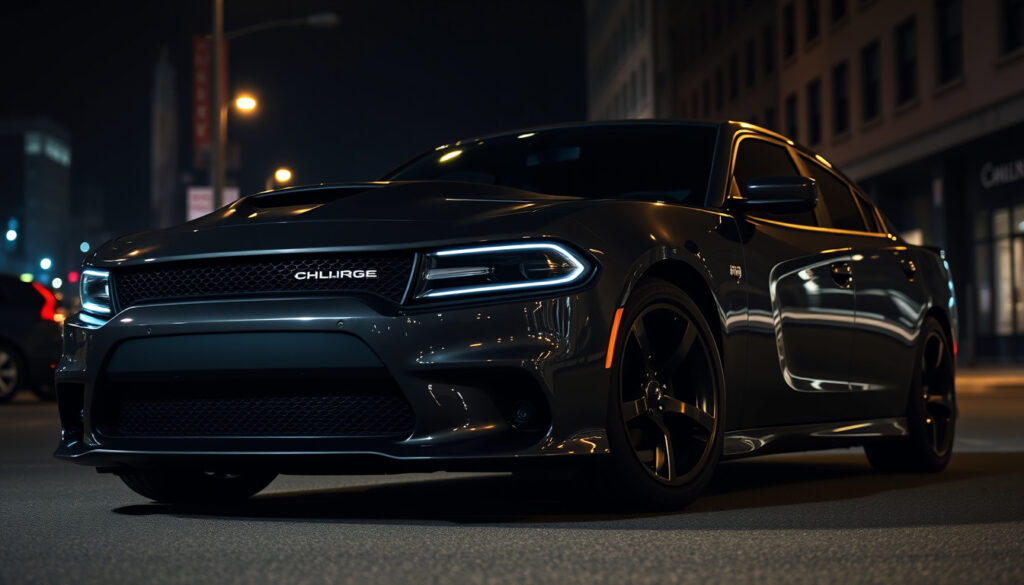
2023 Dodge Charger SRT Hellcat: Pricing, Specs & Theft Prevention
There’s a certain satisfaction in knowing that a full-size four-door sedan can hang with exotics on the drag strip. The Dodge Charger SRT Hellcat delivers precisely that — 717 horsepower in a shape that still seats five. But with that power comes a target on its back: it’s one of the most stolen cars in the United States, and a distinctive red key fob controls whether you get the full threat or a tame cruiser. This guide walks you through the pricing, performance, and the real-world security measures every owner should know.
Horsepower: 717 hp · Torque: 650 lb‑ft · 0‑60 mph: 3.6 seconds · Top speed: 196 mph · Starting price (2023): $72,595 · Engine: Supercharged 6.2L V8
Quick snapshot
- 717 hp from supercharged 6.2L V8 (Dodge official site)
- Red key unlocks full power (Dodge official site)
- Rear‑wheel drive only (Car and Driver)
- Among most‑stolen cars in the U.S. (Motor Authority)
- Exact production numbers for 2023
- Future Hellcat availability after 2023
- 2015: First Charger Hellcat introduced (707 hp) (Car and Driver)
- 2023: Last model year for Charger Hellcat (Car and Driver)
- All-electric Charger Daytona SRT expected 2026 (Dodge Garage)
- Enhanced Security Mode free for 2021+ models (Dodge Garage)
The spec sheet alone tells the story: a supercharged V8, rear‑wheel drive, and a price that undercuts many European competitors. Seven key numbers define the Hellcat experience.
| Specification | Value |
|---|---|
| Engine | 6.2L supercharged V8 |
| Horsepower | 717 hp |
| Torque | 650 lb‑ft |
| 0‑60 mph | 3.6 sec |
| Top Speed | 196 mph |
| Curb weight | 4,570 lbs |
| MSRP (2023) | $72,595 |
How much is a Hellcat Charger SRT?
2023 pricing
- Base MSRP $72,595 for the standard Hellcat (Dodge official site) – about what you’d pay for a loaded Ford F‑150 Raptor.
- The Hellcat Redeye starts around $82,000, bumping output to 797 hp.
- Destination charges add about $1,500.
Three trims, three price tiers. The standard Hellcat gives you 717 hp; the Redeye adds 80 hp and a wider body for about $10,000 more.
Used market prices
- Well‑maintained 2020–2022 models range from $60,000 to $80,000, depending on mileage and condition (Carfax used‑price data).
- Low‑mileage Redeyes can still command $90,000+.
- Prices have held firm because 2023 was the last model year for the V8 Hellcat.
Is it worth the money?
The “poor man’s Ferrari” label gets thrown around, but the Hellcat isn’t a poor man’s anything. It’s a unique value proposition: supercar acceleration in a four‑door family sedan. For buyers who want everyday usability with drag‑strip numbers, the price makes sense. But insurance and fuel costs will remind you that you’re driving a 717‑hp missile.
The trade‑off: you get Lamborghini‑level straight‑line speed for about one‑third the price, but you live with V8 fuel economy and a chassis tuned for go, not show.
The implication: the Hellcat delivers unmatched power per dollar in a practical sedan, but the ongoing costs are real.
Is a Lambo or Hellcat faster?
Hellcat vs Lamborghini Aventador
- Hellcat: 0–60 mph in 3.6 seconds, quarter‑mile in 11.0 seconds (Car and Driver test results).
- Aventador: 0–60 mph in 2.9 seconds, quarter‑mile in 10.5 seconds.
- Top speed: Hellcat 196 mph vs Aventador 217 mph.
The Aventador is quicker in every metric, but the gap is smaller than the price difference suggests (the Aventador costs north of $400,000).
Hellcat vs Demon
- Dodge Challenger SRT Demon: 840 hp, 0–60 in 2.3 seconds, quarter‑mile in 9.65 seconds (factory race setup).
- Charger Hellcat is slower but has four doors and a more practical layout.
- The Demon is a limited‑production drag‑strip special; the Hellcat is a daily‑driver.
Drag race results
In real‑world testing, the Charger Hellcat typically runs the quarter‑mile in the low‑11s. Against a Demon it loses by about a second and a half. Against an Aventador it loses by about 0.7 seconds. But the Hellcat does all of this with four seats and a trunk.
The implication: if raw quarter‑mile bragging rights are all that matter, buy a Demon. If you need to drop kids at school and still embarrass a Corvette on the weekend, the Charger Hellcat wins.
What Charger has 700 horsepower?
Engine specs
- 6.2‑liter supercharged HEMI V8, codenamed Hellcat.
- 717 hp at 6,100 rpm, 650 lb‑ft of torque at 4,800 rpm (Dodge official site).
- Torque‑Flite eight‑speed automatic transmission – no manual option in the Charger (The Straight Pipes review).
Horsepower and torque
That 717 hp makes the Charger Hellcat the most powerful production sedan sold in America. The Redeye variant pushes the number to 797 hp. The torque curve is essentially a plateau from 2,000 rpm to redline, which means effortless passing at any speed.
0‑60 acceleration
Dodge quotes 3.6 seconds, and independent tests have validated that figure. Launch control and a torque‑converter automatic help put power down efficiently. The all‑season tires are the limiting factor; a set of drag radials can shave a couple of tenths.
Why this matters: 3.6 seconds puts the Hellcat in the same acceleration league as a Ferrari 458 Italia. You get that for under $80,000.
What is a red key fob?
What the red key does
- The red key fob unlocks full engine power, steering, and transmission calibration – all 717 hp.
- Without the red key, the car limits output to 500 hp, softer throttle response, and standard transmission shift patterns (Dodge official site).
Black key vs red key
- The black key fob (usually given alongside the red key) restricts the car to a “valet mode” that keeps the revs below 4,000 rpm and torque at about 70%.
- You can switch between keys by physically using the fob – it’s not a software toggle in the infotainment system.
What does SRT stand for?
SRT stands for Street and Racing Technology, Dodge’s high‑performance division. It started as a skunkworks group in the early 2000s and now badges every serious performance model in the lineup. The Charger SRT Hellcat is the most powerful SRT sedan ever built.
The catch: the red key system is both a cool differentiator and a theft‑deterrent layer (a thief can’t easily access full power without the right fob). But it doesn’t prevent relay attacks on the keyless entry.
Why are Hellcats commonly stolen?
Why Hellcats are targeted
- The Hellcat is one of the most‑stolen cars in the United States, with theft rates driven by high resale value and easy parts resale (Motor Authority).
- Keyless‑entry relay attacks amplify the problem. Thieves use a signal amplifier near the house to trick the car into thinking the key fob is present.
How to prevent theft
- Dodge released three free theft‑prevention measures starting August 2021 (Dodge Garage):
- Enhanced Security Mode – requires a unique 4‑digit PIN and limits engine output to less than 3 hp.
- Key Programming Lockdown – prevents programming new fobs after a break‑in.
- Intrusion Module – detects broken windows or movement inside the cabin.
- These features are available on 2015‑current Charger and Challenger models (CarPro report).
Police recommended Faraday pouch
- A Faraday pouch blocks the key fob’s signal, preventing relay attacks. Many police departments recommend keeping fobs in a pouch when parked at home.
- It’s cheap insurance (under $10) against a $70,000 theft.
The pattern: Dodge has addressed the root cause – key fob exploitation – with layered countermeasures. But owners still need to adopt basic habits (Faraday pouch, Enhanced Security Mode) to close the last gap.
The comparison table below shows how the Hellcat stacks up against its main rival and the ultimate Dodge muscle car.
| Specification | Dodge Charger SRT Hellcat | Dodge Challenger SRT Demon | Lamborghini Aventador |
|---|---|---|---|
| Engine | 6.2L Supercharged V8 | 6.2L Supercharged V8 | 6.5L NA V12 |
| Horsepower | 717 hp | 840 hp | 730 hp |
| 0‑60 mph | 3.6 sec | 2.3 sec | 2.9 sec |
| Quarter‑mile | 11.0 sec | 9.65 sec | 10.5 sec |
| Top speed | 196 mph | 168 mph (limited) | 217 mph |
| Doors | 4 | 2 | 2 |
| Starting price (new) | ~$72,595 | ~$85,000 (2018) | ~$400,000 |
In straight‑line performance, the Hellcat sits between the Demon (extreme drag) and the Aventador (supercar all‑rounder). The value argument is clear: you get 90% of the drama for a fraction of the cost.
For a deeper look at the engine, here’s the full spec table.
| Specification | Value |
|---|---|
| Engine | 6.2L supercharged HEMI V8 |
| Horsepower | 717 hp @ 6,100 rpm |
| Torque | 650 lb‑ft @ 4,800 rpm |
| Transmission | 8‑speed automatic |
| Drive | Rear‑wheel drive |
| 0‑60 mph | 3.6 sec |
| Quarter‑mile | 11.0 sec |
| Top speed | 196 mph |
| Curb weight | 4,570 lbs |
| Fuel economy (EPA) | 12 city / 21 highway mpg |
| MSRP (2023) | $72,595 |
Upsides
- Unmatched power per dollar in a four‑door sedan
- Available theft‑deterrent upgrades (free)
- Iconic sound and presence
- Holds value well – last V8 year
Downsides
- One of the most‑stolen cars in the U.S.
- Poor fuel economy – 12 mpg city
- High insurance costs
- No manual transmission option
Timeline: The Hellcat story
- 2015: First Dodge Charger SRT Hellcat introduced with 707 hp, the most powerful production sedan at the time (Car and Driver).
- 2019: Charger Hellcat Redeye launched with 797 hp, wider body, and upgraded cooling.
- 2021: Dodge announces three free theft‑protection measures for all 2015‑current models (Dodge Garage).
- 2023: Last model year for the V8 Charger Hellcat; production ends.
- 2026 (expected): All‑electric Dodge Charger Daytona SRT arrives as the Hellcat’s successor.
Clarity: What we know vs what we don’t
Confirmed facts
- 717 hp for the standard Hellcat (2023)
- Red key unlocks full power
- Hellcat is rear‑wheel drive
- Theft rates are among the highest for any car
- Enhanced Security Mode limits engine to <3 hp
- Key Programming Lockdown prevents fob programming
What’s unclear
- Exact production numbers for the 2023 model year
- Future availability of a Hellcat variant after 2023 (Dodge has not confirmed ICE variants)
“Best‑in‑Class horsepower … the fastest four‑door muscle car.”
Dodge official website
“The Charger SRT Hellcat is a riot – 717 hp that can be tamed with a black key or unleashed with a red one.”
Car and Driver review
For a performance‑car buyer in 2025, the Hellcat represents the last of a breed: a supercharged V8 family sedan. The theft risk is real, but Dodge’s free countermeasures and a simple Faraday pouch make it manageable.
If you buy used, verify that Enhanced Security Mode and Key Programming Lockdown have been installed. Many dealers applied the update free of charge, but some cars may have been missed.
The end of the V8 Hellcat means prices for well‑kept examples will likely hold or rise. For anyone who wants one, the window is closing – and the electric Daytona will be a very different animal.
For buyers in the U.S. market, the choice is clear: buy a 2023 model now, add the theft upgrades, and store the red key in a Faraday pouch. Otherwise, wait for the EV – but don’t expect the same V8 character.
For a detailed breakdown of the Hellcat’s performance and theft deterrents, see this comprehensive review and specs.
Frequently asked questions
What is the top speed of the Dodge Charger SRT Hellcat?
196 mph, according to Dodge official specs.
What is the fuel economy of the Hellcat?
EPA rating: 12 mpg city, 21 mpg highway.
Is the Hellcat all‑wheel drive?
No, it is rear‑wheel drive only.
What is the warranty on a new Hellcat?
Dodge includes a 3‑year/36,000‑mile basic warranty and a 5‑year/60,000‑mile powertrain warranty.
How many Hellcats were produced?
Exact numbers are not released, but estimates suggest over 10,000 Charger Hellcats have been sold since 2015.
Can you daily drive a Hellcat?
Yes – the Charger Hellcat is comfortable, has a large trunk, and the black key makes it civil in traffic. Fuel and insurance are the main costs.
What is the difference between Hellcat and Redeye?
The Redeye has 797 hp vs 717 hp, a wider body, larger supercharger, and upgraded cooling. Pricing starts about $10,000 higher.
What is a Faraday pouch?
A signal‑blocking pouch that prevents relay attacks on keyless‑entry cars. Police recommend it for Hellcat owners. Cost: under $10.
Related reading
More related posts
 Jewel Osco Near Me: Hours, Pharmacy, Delivery & Menu
 Trader Joe’s Tote Bag: Price, Resale Frenzy & Boycott
 TCG Card Shop Simulator Console? PS5, Switch, Xbox Guide
 Best Diablo 4 Interactive Maps: Compare & Find Yours
 Map of Puerto Rico: Location, Cities, Beaches & Facts
 How to Evolve Charcadet – Scarlet and Violet Guide
 Hot Water Heater Replacement Near Me: Ireland Cost Guide
 Dortmund vs. Monterrey: 2-1 Result, Goals & Club World Cup Recap
