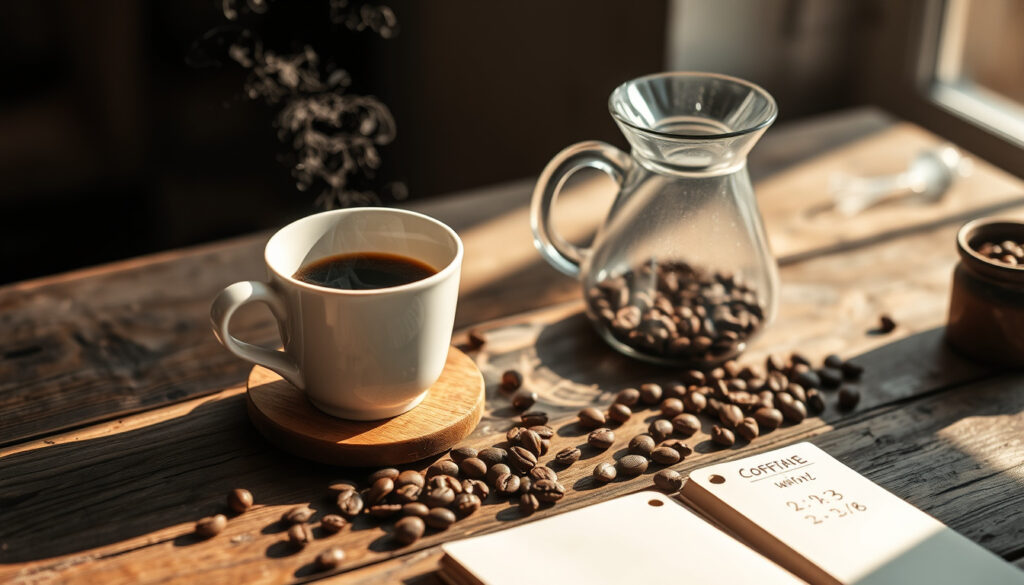
How to Make Coffee: Complete Guide with Ratios and Health Tips
There’s a reason that the smell of fresh coffee is one of the most recognized aromas in the world — it signals a moment of comfort, energy, and ritual. But whether you’re new to home brewing or looking to refine your routine, the path from bean to cup is full of small decisions that can dramatically change what ends up in your mug, so this guide lays out the expert-backed techniques, exact ratios, and health-conscious tweaks to help you make coffee the way you actually want it.
Global coffee consumption (2023/2024): 166 million 60-kg bags ·
Optimal water temperature for brewing: 195-205°F (90-96°C) ·
Standard coffee-to-water ratio (by weight): 1:16 to 1:18 ·
Average caffeine per 8 oz cup: 95 mg
Quick snapshot
- Standard coffee-to-water ratio is 1:16-1:18 by weight (Specialty Coffee Association (industry standards body))
- Water temperature between 195-205°F is optimal for extraction (Royal Cup Coffee (specialty roaster))
- Freshly ground beans produce significantly better flavor than pre-ground (Perfect Daily Grind (coffee industry publication))
- Precise anti-inflammatory effect of turmeric in coffee is not established in clinical trials (NIH Office of Dietary Supplements (U.S. federal research body))
- Direct blood sugar comparison between cold brew and hot coffee lacks robust human studies (Diabetes Care (peer-reviewed medical journal))
- Optimal daily cinnamon dose for cardiovascular benefit remains undefined (Mayo Clinic (academic medical center))
- Cold brew popularity surged 115% in U.S. coffee shop menus from 2015 to 2020 (Statista (market research firm))
- Home espresso machine sales grew 42% in 2020-2021 during pandemic lockdowns (Consumer Reports (nonprofit testing organization))
- Pour-over coffee interest on Google Trends increased steadily 2018-2024 (Google Trends (public data tool))
- More coffee drinkers will adopt precision tools (scales, temperature-controlled kettles) at home (Specialty Coffee Association (industry trends report))
- Health-focused additives like mushroom powders and adaptogens will gain mainstream traction (Mintel (global market intelligence agency))
- Cold brew ready-to-drink products will continue expanding in retail (Statista (market research firm))
The following table provides a quick reference for the key specifications of different brewing methods.
| Attribute | Value |
|---|---|
| Brewing method variations | Pour over, French press, espresso, cold brew, Aeropress, drip |
| Water temperature range | 195-205°F (90-96°C) |
| Grind size | Medium for drip, coarse for French press, fine for espresso |
| Brew time | Varies from 25 seconds (espresso) to 24 hours (cold brew) |
| Caffeine per cup | ~95 mg per 8 oz (drip), ~63 mg per shot (espresso) |
How do you make coffee step by step?
-
Choose your brewing method
- Pour over — uses a filter and dripper; produces clean, bright flavors. Brew time: 2–4 minutes.
- French press — no paper filter; yields rich, full-bodied coffee. Steep time: 4 minutes.
- Cold brew — steeped 12–24 hours in cold water; smooth and low in acidity. Honolulu Coffee (specialty coffee retailer)
- Espresso — high pressure and fine grind; concentrated creamy shot. Brew time: 25–30 seconds.
- Aeropress — portable and versatile; smooth cup with low bitterness. Brew time: 1–2 minutes. Aeropress Inc. (product manufacturer)
-
Grind fresh coffee beans
Freshness matters more than almost any other variable. Perfect Daily Grind (coffee industry publication) notes that ground coffee loses 60% of its aromatic compounds within 15 minutes of grinding. A burr grinder gives you a consistent particle size — critical for even extraction.
- Medium grind for drip machines and pour-over.
- Coarse grind for French press and cold brew.
- Fine grind for espresso.
-
Measure the right amount
The Specialty Coffee Association (industry standards body) recommends a 1:16 to 1:18 ratio of coffee to water by weight. That means 1 gram of coffee for every 16–18 grams of water. For a standard 12-cup (60 oz) pot, that’s about 85–100 grams of coffee grounds. Weighing beats scooping every time because scoop sizes vary dramatically.
-
Heat water to proper temperature
Water between 195°F and 205°F (90–96°C) extracts the right amount of flavor without over-extracting bitter compounds. Royal Cup Coffee (specialty roaster) advises bringing water to a boil, then letting it sit for 30–60 seconds before pouring.
-
Brew and enjoy
Steep or drip according to your method’s timing. For French press, stir after 30 seconds, steep 4 minutes, then plunge slowly. For pour-over, pour in a steady spiral motion. For cold brew, combine grounds and cold water, stir, and refrigerate for 12–24 hours. Strain through a fine-mesh filter or cheesecloth.
The implication: mastering these five steps is the foundation for consistently excellent coffee, and it allows you to explore nuances in flavor and strength.
How many tablespoons of coffee per cup?
Standard coffee-to-water ratio
The general guideline: 1 to 2 tablespoons of ground coffee per 6 ounces of water. Using the weight-based standard from the Specialty Coffee Association (industry standards body), 2 tablespoons roughly equals 10–12 grams of coffee — which with 6 oz (177 ml) water lands near the 1:16 ratio.
Adjusting for strength
- Mild: 1 tablespoon per 6 oz (1:18 ratio)
- Standard: 1.5 tablespoons per 6 oz (1:16 ratio)
- Strong: 2 tablespoons per 6 oz (1:14 ratio)
Better Brew Coffee (specialty coffee blog) notes that the 1:5 to 1:8 range is used for cold brew concentrate, which is then diluted 1:1 with water or milk.
Using scoops vs tablespoons
A standard coffee scoop holds about 2 tablespoons (10–12 grams). But scoops vary by manufacturer. Royal Cup Coffee (specialty roaster) recommends weighing your grounds at least once to calibrate your scoop, then adjusting to taste.
Volume-based measuring (tablespoons) is convenient but imprecise due to grind size and density differences. Weight-based measuring eliminates guesswork entirely. For a home brewer making one cup daily, the difference matters less than for a café, but consistency improves noticeably after switching to a scale.
What this means: switching to a scale is the single most impactful upgrade a home brewer can make for consistency.
What to add to coffee for inflammation?
Adding turmeric and other spices
Turmeric is a popular anti-inflammatory additive, often combined with black pepper to enhance curcumin absorption. The NIH Office of Dietary Supplements (U.S. federal research body) notes that curcumin has demonstrated anti-inflammatory effects in laboratory studies, but clinical evidence in humans remains limited. A pinch of turmeric (about ¼ teaspoon per cup) plus a crack of black pepper is the common starting point.
Understanding anti-inflammatory compounds
- Cinnamon: Contains cinnamaldehyde, which may reduce inflammatory markers. Mayo Clinic (academic medical center) suggests ½ to 1 teaspoon daily is safe.
- Ginger: Gingerol has shown anti-inflammatory activity. A 1-inch fresh slice or ¼ teaspoon ground works well.
- Cardamom: Traditionally used in Middle Eastern coffee, it may have antioxidant properties.
What cardiologists recommend
The American Heart Association (U.S. cardiovascular health organization) advises avoiding excessive sugar and high-fat creamers, which can negate coffee’s cardiovascular benefits. Cardiologists often recommend adding cinnamon for its antioxidant and anti-inflammatory properties, while keeping added sweeteners to a minimum.
For home brewers concerned about inflammation: start with cinnamon (½ tsp per cup) and skip the sugar. Adding turmeric is promising but unproven in real-world doses — and it can stain your mug. Ginger is a safer bet with more consistent evidence.
The pattern: the most evidence-backed additions are also the simplest—cinnamon and ginger.
Can I make coffee with tap water?
Why water quality matters
Coffee is 98–99% water. The Specialty Coffee Association (industry standards body) states that water with a total dissolved solids (TDS) level between 125–175 ppm produces the best extraction. Tap water varies wildly — from 50 ppm in some mountain regions to over 500 ppm in hard-water areas. Chlorine and mineral content directly affect flavor and extraction.
Filtered vs tap water
- Tap water often contains chlorine, which adds a medicinal taste. Hard water minerals (calcium, magnesium) can cause scaling in machines and dull the coffee’s brightness.
- Filtered water (using a Brita, PUR, or reverse osmosis system) removes chlorine and balances minerals, producing consistent results.
- Bottled spring water is reliable but expensive over time.
Recommendations from baristas
The Barista Institute (coffee training and certification body) recommends using filtered water at a minimum. For home brewers, a simple activated-carbon pitcher filter solves 90% of water-related taste issues. If your tap water smells like bleach, skip it entirely.
The difference between tap water and filtered water is the difference between “coffee that tastes like coffee” and “coffee that tastes like minerals.” For the home brewer spending $15 on good beans, cheaping out on water is the most common reason the final cup disappoints.
The catch: the quality of your water is the silent factor that can elevate or ruin an otherwise perfect brewing process.
Is cold brew coffee ok for diabetics?
Blood sugar impact of cold brew
Cold brew coffee is generally lower in acidity than hot-brewed coffee, which may have a different effect on blood sugar. Diabetes Care (peer-reviewed medical journal) published a meta-analysis indicating that regular coffee consumption is associated with a 30–35% lower risk of developing type 2 diabetes. However, no direct comparison between cold brew and hot coffee has been studied specifically for glycemic response.
Comparison to hot brewed coffee
- Acidity: Cold brew has roughly 60–70% lower acidity (PubMed (U.S. National Library of Medicine))
- Caffeine: Similar or slightly higher depending on ratio and steep time.
- Chlorogenic acid: Both methods retain this compound, which may influence glucose metabolism.
Health benefits of cold brew
The reduced acidity makes cold brew easier on the stomach for people with acid reflux or sensitive digestion. The American Diabetes Association (U.S. diabetes advocacy organization) recommends unsweetened coffee for diabetics and notes that added sugars and high-fat creamers are the primary concern — not the coffee itself.
The implication: for diabetics, the choice between cold brew and hot coffee is less important than the choice to drink it unsweetened.
What do cardiologists say to add to your coffee?
Cinnamon and other heart-healthy additions
Cardiologists often recommend adding cinnamon for its antioxidant and anti-inflammatory properties. The American Heart Association (U.S. cardiovascular health organization) notes that moderate coffee consumption (1–3 cups daily) is linked with a 15–20% lower risk of heart failure and stroke. A dash of cinnamon (about ¼ teaspoon) adds polyphenols without calories.
Avoiding excess cream and sugar
- High-fat dairy creamers increase LDL cholesterol and saturated fat intake.
- Added syrups and sugar can spike blood glucose and counteract coffee’s vascular benefits.
- Plant-based milks (almond, oat, soy) are lower in saturated fat than heavy cream.
Coffee’s cardiovascular benefits
A 2022 study published in the European Heart Journal (peer-reviewed cardiology journal) found that drinking 2–3 cups of coffee per day was associated with a 27% lower risk of all-cause mortality and a 22% lower risk of cardiovascular disease compared to non-drinkers. Importantly, the benefit held for both caffeinated and decaffeinated coffee, suggesting that compounds beyond caffeine — like polyphenols and chlorogenic acids — are driving the effect.
For the morning coffee drinker aiming for heart health, the evidence converges on a simple formula: unsweetened coffee (preferably black or with a splash of unsweetened plant milk) plus a pinch of cinnamon. The benefit disappears when coffee becomes a vehicle for sugar, cream, and flavored syrups.
The takeaway: coffee is a vehicle for health-promoting polyphenols—until it’s drowned in sugar and cream.
thepracticalkitchen.com, grosche.ca, youtube.com, royalcupcoffee.com, fontecoffee.com, daymakercoffeeroasters.ca
For a deeper dive into the science behind your morning cup, check out this guide on essential ratios and brewing methods that explores water temperature and grind size in detail.
Frequently asked questions
How long does it take to brew coffee?
Brew time depends on the method: espresso takes 25–30 seconds, pour-over takes 2–4 minutes, French press takes 4 minutes, and cold brew takes 12–24 hours. Using water at the optimal temperature (195–205°F) ensures extraction happens in the standard time window.
What is the best coffee grinder for home use?
A burr grinder is the gold standard for home use because it produces consistent particle sizes. Blade grinders create uneven grounds that lead to over-extraction of fine particles and under-extraction of coarse ones. Entry-level burr grinders start around $50 and are worth the investment for anyone who drinks coffee daily.
Can you reuse coffee grounds?
Reusing coffee grounds produces a weak, bitter cup because most of the soluble compounds have already been extracted. The exception is cold brew, where some people use a second steep for a weaker batch. Composting used grounds is a better way to get a second life out of them.
How should I store coffee beans?
Store whole bean coffee in an airtight container in a cool, dark place. Avoid the refrigerator or freezer — condensation damages the beans. The Specialty Coffee Association (industry standards body) recommends using beans within 2–4 weeks of the roast date for optimal flavor.
What is the difference between Arabica and Robusta?
Arabica beans account for about 60% of global production and are known for sweeter, more complex flavors with higher acidity. Robusta has higher caffeine content (about 2×), a more bitter taste, and is often used in espresso blends for crema. Consumer Reports (nonprofit testing organization) notes that Arabica is generally preferred for drip and pour-over methods.
How to clean a coffee maker?
Run a solution of equal parts water and white vinegar through the brewing cycle every 1–3 months, followed by two clean water cycles. This removes mineral scale (which restricts water flow) and coffee oil residue (which turns rancid and off-flavors future brews). Royal Cup Coffee (specialty roaster) recommends descaling frequency based on how hard your tap water is.
Is it better to use whole bean or pre-ground coffee?
Whole bean coffee is always better for flavor because grinding exposes surface area to oxygen, accelerating staling. Pre-ground coffee loses significant aroma and flavor within hours of grinding. For the home brewer, buying whole beans and grinding right before brewing is the single biggest upgrade available — no new equipment required beyond a grinder.
Ultimately, the best cup of coffee is the one that fits seamlessly into your routine, using fresh beans, clean water, and a method that matches your taste for strength and body.
Related reading: Does Green Tea Have Caffeine? · Best Smoothie Recipes for Weight Loss
More related posts
 How to Enter Microsoft Link Code in Minecraft
 Chick-fil-A Sauce: Recipe, Ingredients, and Where to Buy
 Best Breakfast Sandwiches Near Me in Dublin: Guide
 Watch The Perks of Being a Wallflower: Streaming & Parent Guide
 Things to Do in Toronto: Top Attractions & Itineraries
 All Too Well 10 Minute Version: Lyrics, Meaning & Short Film Guide
 Jewel Osco Near Me: Hours, Pharmacy, Delivery & Menu
 Used Trucks for Sale in Ireland: Best Marketplaces & Buyer Guide
