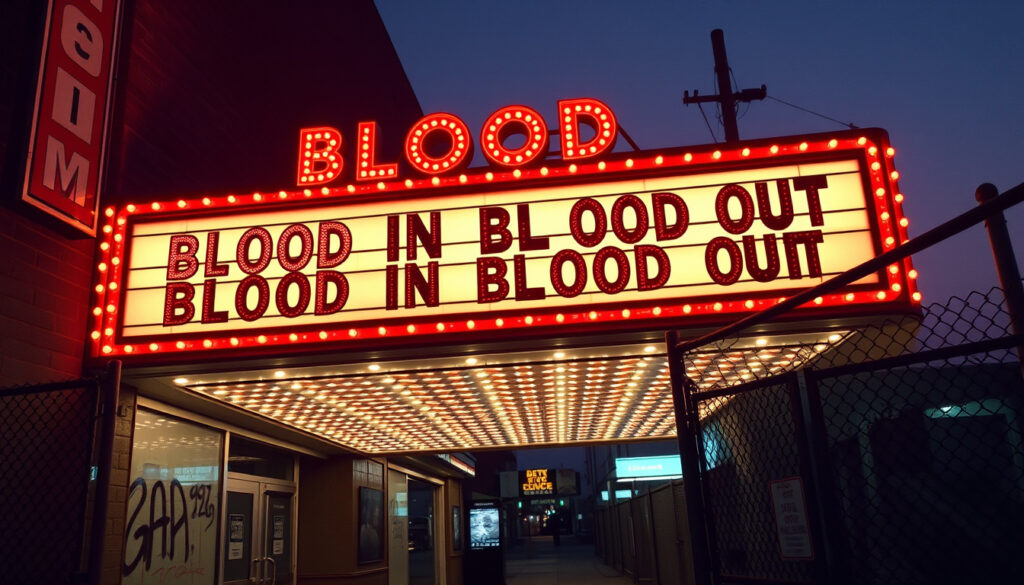
Blood In Blood Out Cast – Full List of Actors and Roles
Blood In Blood Out, originally released under the title Bound by Honor, stands as one of the most significant Chicano crime dramas of the 1990s. The film brought together a remarkable ensemble of actors whose performances captured the raw complexity of gang life, incarceration, and family bonds in East Los Angeles during a twelve-year span from 1972 to 1984.
Directed and produced by Taylor Hackford, the 1993 epic weaves together the stories of three relatives whose lives take dramatically different paths after joining the Vatos Locos gang. The cast features a mix of established performers and newcomers who would go on to build notable careers in film and television.
This comprehensive guide examines every major role in the film, from the central characters portrayed by Damian Chapa, Jesse Borrego, and Benjamin Bratt to the supporting ensemble that brings authenticity to the gang and prison environments depicted in the story.
Who Is in the Cast of Blood In Blood Out?
The Blood In Blood Out cast spans over fifty credited actors, encompassing leads, supporting performers, and numerous background roles that create the immersive world of East L.A. and San Quentin State Prison. The production drew heavily from the Chicano community, casting authentic voices alongside seasoned professionals to achieve historical fidelity.
| Director | Release | Genre | Runtime |
|---|---|---|---|
| Taylor Hackford | 1993 (aka Bound by Honor) | Crime Drama | 180 min |
Key Insights About the Cast
- Benjamin Bratt delivered a breakthrough performance that helped establish his career before his later fame on Law & Order.
- Damian Chapa’s portrayal of Miklo marked one of his most prominent film roles.
- Several cast members, including Danny Trejo and Ving Rhames, would later become recognizable faces in Hollywood.
- The production filmed on location in Spanish-speaking areas of Los Angeles and inside California’s San Quentin State Prison.
- The film introduced Billy Bob Thornton in an early supporting role before his Academy Award-winning success.
- Jimmy Santiago Baca, whose life experiences inspired the story, appears onscreen as the character Gato.
- Over fifty actors received credited roles in the production.
The filmmakers prioritized authentic representation, casting many performers with personal connections to the Chicano experience depicted in the narrative. This approach extended beyond the lead roles to fill gang, prison, and family scenes with genuine cultural resonance.
Snapshot of Principal Roles
| Character | Actor |
|---|---|
| Miklo | Damian Chapa |
| Cruz | Jesse Borrego |
| Paco | Benjamin Bratt |
| Magic Mike | Victor Rivers |
| Release Year | 1993 |
| Rated | R |
Who Played the Main Roles Like Miklo and Paco?
Understanding the central characters requires examining the actors who brought them to life. The three leads share blood ties in the story while representing different facets of life in East Los Angeles and the consequences of gang involvement.
Damian Chapa as Miklo
Damian Chapa portrays Miklo, the bi-racial cousin whose mixed heritage creates complications within the predominantly Mexican-American Vatos Locos gang. Chapa’s performance captures Miklo’s struggle to prove his loyalty and belong despite his heritage, earning him the nickname “Milkweed” Velka from gang members who question his commitment. His character arc follows the most dramatic trajectory, culminating in his rise through the prison gang hierarchy where racial tensions create constant danger.
Chapa brought intensity to the role that helped establish the character as one of the film’s most memorable figures. The actor’s physical presence and emotional range conveyed the internal conflict of a man caught between worlds.
Benjamin Bratt as Paco
Benjamin Bratt plays Paco, one of the half-brothers at the center of the narrative. Bratt’s portrayal emphasizes Paco’s journey away from gang life, depicting the character’s attempt to forge a different path through military service. His performance showcases the tension between loyalty to family and the desire to escape the cycle of violence that claimed others in the community.
This role represented a significant early-career opportunity for Bratt, who would later become widely recognized for his work on Law & Order and various film projects. Critics noted his ability to convey quiet resolve beneath the street-wise exterior of the character.
Jesse Borrego as Cruz
Jesse Borrego takes on the role of Cruz, the other half-brother whose artistic sensibility offers a contrasting approach to survival in the neighborhood. Borrego’s Cruz pursues creative expression while navigating the same dangerous environment that pulls his relatives toward destruction. The character’s tragic arc through the narrative underscores the film’s examination of how circumstances beyond individual control shape human destinies.
The three protagonists share genuine family bonds within the story, making their diverging paths particularly poignant. Miklo’s mixed heritage creates additional layers of conflict, while Paco and Cruz navigate shared experiences despite their different responses to gang life.
Supporting Cast Members
The ensemble extends beyond the central trio to include performers who shape the world around the main characters. Delroy Lindo brings complexity to Bonafide, a figure whose authority within the prison system commands attention. Victor Rivers portrays Magic Mike, whose presence influences the gang’s trajectory in significant ways.
Tom Towles plays Red Ryder, adding another layer to the criminal underworld depicted in the production. Carlos Carrasco appears as Popeye, contributing to the authentic portrayal of gang hierarchy and dynamics. Teddy Wilson takes on the role of Wallace, while Raymond Cruz portrays Chuey and Valente Rodriguez plays Frankie in supporting capacities.
Notable additions to the supporting cast include Billy Bob Thornton as Lightning, whose performance predates the actor’s later success with Sling Blade. Danny Trejo appears as Geronimo, a role that began his evolution into one of Hollywood’s most recognizable character actors. Ving Rhames plays Ivan, and Lupe Ontiveros portrays Carmen, the mother figure whose presence anchors the family segments of the story.
What Is Blood In Blood Out About?
The narrative unfolds across twelve years, beginning in 1972 and extending to 1984, tracking the intertwined fates of three Chicano relatives who become members of the Vatos Locos gang in East Los Angeles. Director Taylor Hackford structures the story to follow how a single violent crime and the influence of drugs pull these family members in opposite directions, with one entering military service, one pursuing artistic expression through tragedy, and one confronting incarceration.
The Three Paths
The divergence of the characters’ lives forms the emotional core of the production. Miklo finds himself imprisoned after the initial crime, where he must navigate the dangerous hierarchies of San Quentin State Prison. Inside the walls, he rises through the gang structure while confronting the racial tensions that define institutional life. His survival depends on the very loyalty codes that contributed to his original conviction.
Paco attempts to escape by joining the military, seeking distance from the neighborhood and its expectations. However, his connection to family and past creates complications that test his resolve. Cruz channels his experience into art, but the tragedies that surround him exact a heavy toll on his creative and emotional capacities.
Gang Life and Prison Culture
The production spares no detail in depicting the reality of gang involvement, showing how young men become trapped in systems of violence and retribution. The Vatos Locos emerge as a complex organization where loyalty provides both protection and burden. Filmmakers captured authentic settings in Los Angeles neighborhoods, lending credibility to the street-level scenes.
Prison sequences, filmed inside actual California correctional facilities, expose viewers to the harsh realities of incarceration. The film illustrates how gang affiliations continue within prison walls, creating layered dangers for those already confined. Miklo’s ascent through these ranks forms some of the narrative’s most intense moments.
Family, Loyalty, and Redemption
Beneath the crime and violence, the story examines bonds that persist despite circumstances pulling people apart. The phrase “blood in, blood out” encapsulates the unbreakable nature of family ties and the permanent commitments required by gang membership. Redemption remains possible, but the path requires confronting past choices and their consequences.
The conclusion brings the characters’ paths back into proximity, testing whether the bonds between them can withstand the years of separation and the different people they have become. The ending emphasizes that loyalty flows in both directions, requiring sacrifice from all parties involved.
Is Blood In Blood Out Based on a True Story?
Blood In Blood Out draws inspiration from real-life experiences, though the production blends fact with fiction to create its narrative. The film’s foundation rests on the personal history of Jimmy Santiago Baca, a celebrated poet whose own journey through gang life and incarceration informed the story’s authenticity.
The production credit lists “inspired by” rather than “based on,” reflecting the creative liberties taken in translating Baca’s experiences into the fictional narrative. The core themes of gang involvement, prison, and redemption reflect genuine struggles, but specific characters and events have been fictionalized.
Jimmy Santiago Baca’s Involvement
Jimmy Santiago Baca contributed to the production in multiple capacities, serving as both a writer and producer while also appearing onscreen as the character Gato. His intimate knowledge of the environments depicted brought credibility to the script, ensuring that dialogue and situations reflected lived experience rather than assumptions.
Baca’s transition from Chicano poet to screenwriter marked a significant moment in representation, as authentically sourced stories began reaching broader audiences through commercial filmmaking.
Production Origins
Development began with Baca’s screenplay drafts, which were refined through contributions from Ross Thomas, Floyd Mutrux, and Jeremy Iacone. The collaborative writing process shaped the narrative’s structure, balancing personal testimony with dramatic requirements of the medium. Filming commenced in 1991, with production prioritizing location authenticity by shooting in actual Los Angeles neighborhoods and San Quentin.
The original working title, Bound by Honor, reflected themes of loyalty and commitment that remain central to the finished work. The title change to Blood In Blood Out arrived with the 1993 theatrical release, though both titles continue to appear in various listings and discussions.
Director Taylor Hackford’s Approach
Taylor Hackford approached the project with a commitment to authentic representation, working closely with Baca and consulting community members throughout production. His experience directing Once Upon a Time in Hollywood and other ensemble dramas informed his ability to coordinate large casts while maintaining emotional focus.
Hackford’s direction emphasizes environmental immersion, allowing Los Angeles locations to contribute to the narrative’s texture rather than serving as mere backdrops.
Timeline of Production and Release
Understanding the context of Blood In Blood Out requires examining the key moments that brought the film from concept to theatrical release.
- 1984: The story concept begins taking shape as Jimmy Santiago Baca develops initial scripts reflecting his experiences within Chicano gang culture and time in prison.
- 1991: Principal photography commences in Los Angeles neighborhoods and inside California’s San Quentin State Prison, prioritizing authentic locations over studio sets.
- February 5, 1993: The film premieres in the United States, debuting in limited markets before wider distribution.
- April 30, 1993: Wide theatrical release across the United States; the film debuts at #13 on the domestic box office charts.
- 1993: The film is re-released under its alternative title, Bound by Honor, in some markets and home video formats.
The April 1993 opening placed the film at #13 domestically, demonstrating commercial viability despite the challenging subject matter. Critical reception proved mixed, with the Metascore landing at 47 out of 100, though audience response within targeted communities remained strong.
What Is Confirmed vs. Uncertain About the Film?
When examining claims about Blood In Blood Out, distinguishing established facts from unclear elements helps readers understand the boundaries of available information.
| Aspect | Status |
|---|---|
| Director | Confirmed: Taylor Hackford directed and produced |
| Inspiration source | Confirmed: Inspired by Jimmy Santiago Baca’s experiences |
| Filming locations | Confirmed: Los Angeles and San Quentin State Prison |
| Release date | Confirmed: February 5, 1993 (premiere), April 30, 1993 (wide) |
| Runtime | Confirmed: 180 minutes |
| Specific ending details | Uncertain: Available sources do not provide comprehensive scene-by-scene breakdowns |
| Box office total | Uncertain: Opening position confirmed, total earnings unclear |
Background and Cultural Impact
Beyond its narrative merits, Blood In Blood Out holds significance as a landmark in Chicano cinema. The production represented one of the most substantial mainstream portrayals of Mexican-American experiences during the early 1990s, drawing attention to stories that had previously received limited representation in commercial filmmaking.
The film’s depiction of gang life, prison culture, and family dynamics resonated particularly within the Mexican-American community, where viewers recognized authentic elements absent from earlier Hollywood portrayals. This authenticity contributed to the film’s enduring status as a cult classic, with dedicated fan bases continuing to celebrate it more than twenty years after its release.
Critical reception proved divided, with some reviewers praising the ambitious scope and performances while others found fault with pacing and tonal inconsistencies inherent in a three-hour crime drama. Rotten Tomatoes aggregators reflect this division in their contemporary assessment. Nevertheless, audience enthusiasm has sustained the film’s relevance through home video, streaming availability, and community screenings.
Legacy and Continuing Relevance
The careers launched or advanced through Blood In Blood Out demonstrate the production’s industry impact. Benjamin Bratt’s subsequent success on television and film stages benefited from the exposure, while Danny Trejo’s appearance marked an early step in his evolution toward character actor status.
The film continues to appear on streaming platforms and generates discussion whenever new audiences discover its unflinching portrayal of environments that remain relevant today. Academic discussions of Chicano representation frequently cite the production as a touchstone, examining how its approach to authenticity and cultural specificity influenced subsequent filmmaking.
“The film captures something essential about the way communities respond to systemic pressures, using individual stories to illuminate broader social conditions.”
Rotten Tomatoes critical consensus
Summary
The cast of Blood In Blood Out brought remarkable depth to one of the most significant Chicano crime dramas of the early 1990s. Damian Chapa, Benjamin Bratt, and Jesse Borrego anchored a production that explored gang life, incarceration, and family loyalty across twelve years of narrative time. Supporting performances from Delroy Lindo, Danny Trejo, Ving Rhames, and numerous others created an ensemble whose collective effort brought authenticity to difficult material.
For readers interested in comparable ensemble crime dramas from the same era, exploring the Cast of Play Dirty Film offers additional perspective on the genre’s evolution.
Frequently Asked Questions
Who directed Blood In Blood Out?
Taylor Hackford directed and produced the film. Hackford is also known for directing Devil in a Blue Dress and An Officer and a Gentleman.
What is the runtime of Blood In Blood Out?
The film runs 180 minutes, making it one of the longer crime dramas from the 1990s.
When was Blood In Blood Out released?
The film premiered in the United States on February 5, 1993, with a wider release following on April 30, 1993.
Is Blood In Blood Out based on a true story?
The film was inspired by the real-life experiences of poet and screenwriter Jimmy Santiago Baca, though the specific characters and events are fictionalized.
What other names has the film been released under?
The film was originally titled Bound by Honor and has also appeared as Blood In Blood Out: Bound by Honor in various markets and home video releases.
Who played Miklo in Blood In Blood Out?
Damian Chapa portrayed Miklo, the bi-racial cousin whose journey through prison forms one of the film’s central storylines.
How did the film perform at the box office?
The film debuted at #13 on the domestic box office during its opening weekend in April 1993, though total earnings figures remain unclear.
More related posts
 Detroit Tigers vs Cleveland Guardians: Rivalry Stats
 Why Is Savannah Guthrie Trending Today? Mother Missing
 What Is Cephalexin 500 mg Used For? Uses, Dosage, Side Effects
 Regé-Jean Page: Bridgerton Star Bio, Girlfriend, Movies & Height
 Does Instagram Notify When You Screenshot a Story? (2026)
 Where is Purdue University? Location, Reputation, Cost & More
 Hotel Jobs Near Me – Open Positions at Nearby Hotels
 Packers vs Cowboys Stats: All-Time Record & 2025 Tie
