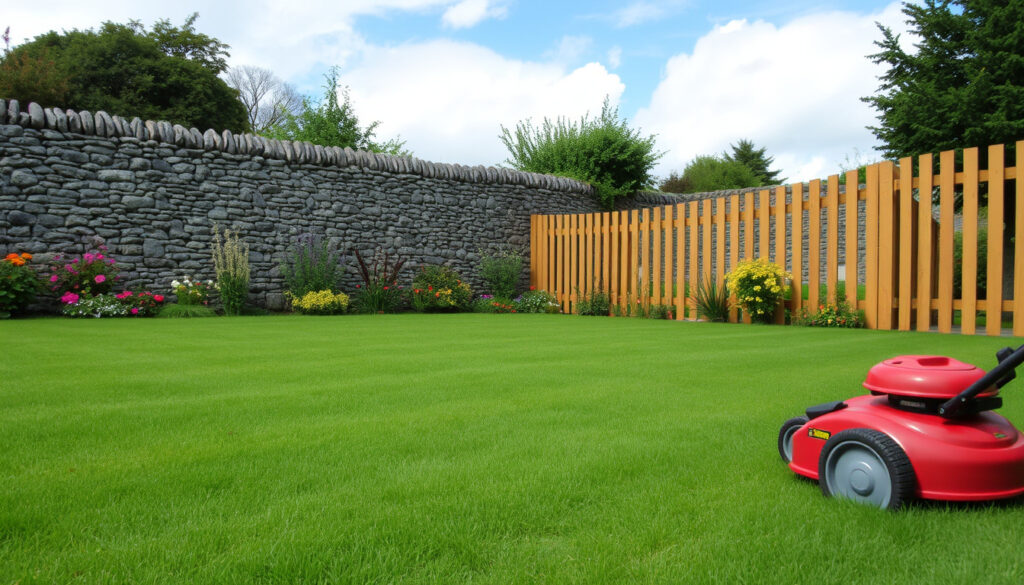
Lawn Care Near Me: Costs, Timing & Expert Tips for Ireland
For anyone who’s watched their lawn turn into a mossy bog over a wet Irish winter, spring brings a mix of relief and panic. The grass is growing, weeds are popping up, and figuring out what to do first — and who to call — can feel like a puzzle. With a few seasonal benchmarks and a clear picture of what services actually cost across Ireland, finding a lawn care provider near you becomes a lot more straightforward.
Average cost per lawn care visit (Ireland): €170 (Bark.com, service marketplace) ·
Minimum treatment cost: €19 (Lawndoctor.ie, lawn treatment provider) ·
Average UK scarification cost: €200–€400 (MyJobQuote, UK trades comparison site) ·
First lawn cut of the year: March–April, when grass reaches 3 inches (BLACK+DECKER, power tool manufacturer)
Quick snapshot
- First cut when grass reaches 3 inches (BLACK+DECKER)
- Scarify in early spring or autumn when grass is actively growing (ALLETT Ireland)
- Do not fertilize in late fall or winter (Wayne County Center, OSU Extension)
- Exact best time to treat varies by grass type and microclimate
- Optimal scarifying frequency depends on thatch buildup rate
- Early March: First mow when grass reaches 3 inches (BLACK+DECKER)
- April: Pre-emergent herbicide and spring fertilizer (Wayne County Center, OSU Extension)
- August: Scarify if thatch is thick (ALLETT Ireland)
- Book spring treatments by late March to secure slots
- Compare quotes from at least 3 local providers
Pricing and timing vary, but the table below captures the key benchmarks for Irish lawns.
| Metric | Value |
|---|---|
| Average cost per visit | €170 (Bark.com) |
| Minimum treatment cost | €19 (Lawndoctor.ie) |
| Scarification cost (UK reference) | €200–€400 (MyJobQuote) |
| First cut month | March–April (grass 3 inches, BLACK+DECKER) |
| Avoid fertilizing months | November–February (Wayne County Center, OSU Extension) |
| Small garden cut (Ireland) | €20–€45 (Handl Ireland, lawn care pricing aggregator) |
| Standard front-and-back cut (Ireland) | €30–€70 (Handl Ireland) |
| Large garden cut (Ireland) | €60–€160 (Handl Ireland) |
| Overgrown first cut (Ireland) | €80–€280 (Handl Ireland) |
| Seasonal treatment (feed + moss control) | €50–€160 per application (Handl Ireland) |
What is the best time to treat my lawn?
Timing a lawn treatment in Ireland means reading the grass, not the calendar. The country’s mild, wet climate pushes growth earlier than many UK guides suggest, and getting the sequence right — cut, feed, weed, scarify — determines whether your lawn thrives or just survives.
What month should you first cut your grass?
The first cut of the year should happen when the grass reaches about 3 inches tall, according to BLACK+DECKER (power tool manufacturer). In Ireland, that typically falls between early March and mid-April, depending on how mild the winter was. Cutting too early — when the ground is still waterlogged — can tear the turf and compact the soil. A standard semi-detached garden in a town like Dundalk usually takes 30 to 45 minutes to cut, edge, and tidy, per Gardening Services Dundalk (Louth-based lawn care provider).
When should I scarify my lawn in Ireland?
Scarification — removing thatch and moss — works best when the grass is actively growing and can recover quickly. ALLETT Ireland (lawn care equipment specialist) recommends early spring or early autumn for Irish lawns. August is a practical window if thatch buildup is visible: the soil is warm, growth is still strong, and the lawn has six to eight weeks before the first frosts. Scarification costs in the UK range from €200 to €400, according to MyJobQuote (UK trades comparison site), and Irish prices are broadly similar for comparable work.
Spring Lawn Care Steps
- First cut (March–April): Mow at 3 inches, collect clippings, and avoid cutting too low.
- Pre-emergent herbicide (April): Apply before weeds germinate. Spring is the optimal window for pre-emergent treatments, per Wayne County Center, OSU Extension (agricultural research body).
- Spring fertilizer (April–May): Use a balanced feed with nitrogen to support leaf growth. Avoid fertilizing in late fall or winter.
- Moss control (as needed): Apply iron-based moss killer if moss coverage exceeds 20%. Irish lawns are prone to moss due to acidic, compacted soil.
Irish homeowners who treat in early spring get a longer growing window than those who wait until May. The trade-off: treating too early, while the soil is still cold, can waste product and stress the grass. Watch the grass height, not the date.
How much does it cost to get a lawn cut in Ireland?
Lawn cutting prices in Ireland vary more by garden size and condition than by region. A standard weekly cut for a semi-detached house runs between €25 and €50 across most of the country, while overgrown first cuts or large estates reach €280 or more. Understanding the breakdown helps you spot a fair quote.
What is the best price to cut grass?
For a small garden, Handl Ireland (lawn care pricing aggregator) lists typical costs at €20 low, €30 average, and €45 high. A standard front-and-back garden ranges from €30 to €70, with a typical visit around €45. Large gardens run €60 to €160, and overgrown first cuts — the ones that need strimming, bagging, and a full tidy — range from €80 to €280. QuoteHub Ireland (service comparison platform) puts lawn-mowing-only visits at €20 to €40, and regular maintenance visits at €40 to €100.
How much does it cost to scarify a lawn?
Scarification is a heavier job than mowing, which is why it costs more. Based on UK benchmarks from MyJobQuote, scarification runs €200 to €400 for a standard residential lawn. Irish providers typically quote within the same range, with the price varying by thatch depth, access, and whether the clippings are removed. Some full treatment plans that include scarification, aeration, and overseeding can push past €600.
What is the hourly rate for a gardener in Ireland?
Gardener hourly rates in Ireland typically fall between €25 and €50, according to Gardening Services Dundalk (Louth-based lawn care provider). Handl Ireland lists a narrower range of €25 to €45 per hour for general garden work. The rate often depends on whether the gardener brings their own equipment, handles disposal, and covers travel time. In Dublin, Garden Pro (Dublin gardening service guide) notes that basic lawn mowing alone runs €30 to €50 per visit, while full maintenance packages — mowing, edging, weeding, and trimming — range from €100 to €150 per monthly visit.
Paying a higher hourly rate for an experienced gardener who brings commercial-grade equipment often results in a cleaner cut and less damage to the turf. The cheapest quote may save €10 per visit but cost more in lawn repair later.
What this means: for routine cuts, a mid-range quote usually offers the best value-to-quality balance.
What months should you not fertilize?
Fertilizing at the wrong time doesn’t just waste money — it can damage the lawn and encourage disease. The rule for Ireland is simple: stop feeding by late October and don’t start again until the grass is actively growing in spring.
When should you fertilize?
Apply spring fertilizer in April or May, once the grass is growing steadily and the soil temperature has risen above 8°C. Wayne County Center, OSU Extension (agricultural research body) advises waiting until the grass is actively growing — feeding too early, when the roots aren’t taking up nutrients, leads to runoff and waste. A second application in early summer (June) can support growth through the warmer months, and an autumn feed in September strengthens roots for winter.
Why avoid fertilizing too early?
Fertilizing in late fall or winter, when the grass has stopped growing, leaves nutrients sitting in cold soil where they can leach into waterways or feed moss instead of grass. Wayne County Center, OSU Extension explicitly warns against fertilizing too early — the grass can’t use the nutrients, and the excess nitrogen can weaken the turf going into winter. Over-fertilizing also increases the risk of fungal diseases, especially in Ireland’s damp climate.
The “no fertilizing after October” rule has one exception: a low-nitrogen autumn feed applied in September actually strengthens roots for winter. The key is timing — September feed, not November.
The pattern: target spring feeding to the start of active growth and autumn feeding to root strengthening, never to dormant periods.
What are signs of an unhealthy lawn?
An unhealthy lawn sends clear signals — you just need to know what to look for. Colour, texture, and the presence of weeds or moss tell you what’s going on beneath the surface.
How to identify lawn diseases
Yellowing or browning patches that spread quickly often indicate a fungal disease like red thread or fusarium patch, both common in Irish lawns after wet spells. Gecko Green (lawn care provider) notes that yellowing grass is a classic sign of nitrogen deficiency, but when combined with a slimy or cottony growth on the blades, it points to disease rather than nutrition. Good drainage and avoiding over-fertilizing are the main preventive measures.
Signs of nutrient deficiency
- Yellowing leaves: Nitrogen deficiency — the most common issue in Irish lawns after heavy rain leaches nutrients from the soil.
- Stunted growth: Phosphorus deficiency, especially in clay-heavy soils common in the midlands and east coast.
- Purple or red tinge: Potassium deficiency, often seen in sandy or coastal soils.
- Patchy, thin growth: May indicate thatch buildup — a layer of dead grass and roots that blocks water and nutrients from reaching the soil.
Signs of pest infestation
Leatherjackets (crane fly larvae) and chafer grubs are the most common lawn pests in Ireland. Signs include birds pecking at the lawn, spongy turf that lifts easily, and brown patches that appear in late summer. Gardening Services Dundalk (Louth-based lawn care provider) recommends checking for grubs by peeling back a small square of turf — if you find more than five grubs per square foot, treatment is needed. Moss and weeds like clover and daisies also signal poor drainage or acidic soil, both of which are widespread in Ireland.
Should I cut grass before scarifying?
Yes — cutting the grass short before scarifying is essential for the scarifier to reach the thatch layer at the soil surface. ALLETT Mowers (lawn care equipment specialist) states that the scarifier needs clear access to the thatch, and long grass gets in the way, reducing effectiveness and potentially damaging the machine.
What is the best height to cut before scarifying?
Mow the lawn to about 1 to 2 inches before scarifying. Cutting too low risks damaging the growing points (crowns) of the grass plants, which can slow recovery. ALLETT Mowers advises a moderate cut — short enough to expose the thatch, but not scalping the lawn. After scarifying, water the lawn and apply a light feed to help it recover.
Why cut before scarifying?
Scarifiers work by raking through the grass to pull out dead matter, moss, and thatch. If the grass is long, the blades bend over and the scarifier can’t reach the soil surface effectively. The result is a patchy, uneven removal that leaves the worst of the thatch behind. Cutting first also makes it easier to collect the debris after scarifying, leaving a cleaner lawn that can breathe and absorb nutrients.
Comparing Lawn Care Services in Ireland
The table below shows how different service types compare in cost, frequency, and annual outlay.
| Service type | Typical cost per visit | Frequency | Annual estimate |
|---|---|---|---|
| Basic mowing (small garden) | €20–€45 | Weekly (Mar–Oct) | €600–€1,350 |
| Mowing + edging (standard garden) | €30–€70 | Weekly (Mar–Oct) | €900–€2,100 |
| Seasonal treatment (feed + moss) | €50–€160 | 2–4 times per year | €100–€640 |
| Scarification | €200–€400 | 1–2 times per year | €200–€800 |
| Full maintenance package | €100–€150 | Monthly or bi-weekly | €600–€1,500 |
Prices drawn from Handl Ireland, Garden Pro, and QuoteHub Ireland. Annual estimates assume a 30-week growing season (March–October).
Pros and Cons of Professional Lawn Care
Upsides
- Consistent schedule — no gaps in mowing or treatment timing
- Professional equipment cuts cleaner and reduces disease risk
- Experts spot problems (pests, disease, thatch) early
- Bulk treatments (feed, moss, weed) are often cheaper than DIY product costs
Downsides
- Annual cost of €700–€1,500 for full maintenance (Gardening Services Dundalk)
- Less control over product choices and application timing
- Dependence on provider availability — peak season slots fill fast
- Some providers push unnecessary treatments to boost revenue
The catch: professional care pays off most for complex tasks like scarification and disease treatment, while routine mowing can be DIY with minimal expertise.
Steps to a Healthier Lawn This Year
- Assess your lawn in early March. Walk the garden and note moss coverage, bare patches, and thatch depth. Order any treatment products before the spring rush.
- First cut at 3 inches. Set the mower to its highest setting. Collect clippings to prevent thatch buildup.
- Apply pre-emergent herbicide in April. Target annual meadow grass and chickweed before they germinate.
- Fertilize in April–May. Use a slow-release nitrogen feed. Water in if no rain is forecast within 48 hours.
- Monitor for moss and weeds through summer. Spot-treat weeds with a selective herbicide. Apply iron-based moss killer if needed.
- Scarify in August or early September if thatch is more than 1 cm thick. Cut the grass short first.
- Apply autumn feed in September. Use a low-nitrogen, high-potassium formula to strengthen roots for winter.
- Final cut in October. Lower the mower slightly for the last cut. Clear leaves and debris to prevent fungal growth.
For other home service cost guides, check out our articles on Hot Water Heater Replacement Near Me: Ireland Cost Guide and Emergency Garage Door Repair: Costs & Manual Operation.
Seasonal Lawn Care Timeline for Ireland
The timeline below summarises the key actions month by month.
| Period | Action | Key detail |
|---|---|---|
| Early March | First mow | When grass reaches 3 inches (BLACK+DECKER) |
| April | Pre-emergent herbicide + spring fertilizer | Apply after first cut, before weeds germinate |
| May | Second fertilizer application (if needed) | Only if growth is slow or colour is pale |
| June–July | Regular mowing, spot weed treatment | Mow weekly, water deeply during dry spells |
| August | Scarify if thatch is thick | Cut grass short first (ALLETT Ireland) |
| September | Autumn fertilizer | Low-nitrogen, high-potassium to strengthen roots |
| October | Last mow, prepare for winter | Lower mower height, clear leaves, avoid fertilizing |
Sticking to this calendar gives your lawn the best chance to withstand Ireland’s wet winters and bounce back each spring.
What We Know and What’s Still Unclear
Confirmed facts
- Cut grass before scarifying to allow the scarifier to reach thatch (ALLETT Mowers)
- Do not fertilize in late fall or winter (Wayne County Center, OSU Extension)
- First cut in spring when grass is 3 inches (BLACK+DECKER)
- Scarify in early spring or autumn when grass is actively growing (ALLETT Ireland)
What’s unclear
- Exact best time to treat varies by grass type and microclimate — no single date works for every Irish garden
- Optimal scarifying frequency depends on how quickly thatch builds up, which varies by soil type and mowing habits
Because most recommendations come from single manufacturer or extension sources, local experimentation remains the best guide.
Expert Perspectives on Lawn Care
“One of Ireland’s leading lawn care specialists with a wealth of experience.”
— Greenfeet Lawn Care (Irish lawn care specialist), describing their own approach to seasonal lawn treatment
“Avoid Fertilizing Your Lawn Too Early – wait until grass is actively growing.”
— Wayne County Center, Ohio State University Extension (agricultural research body), on the risks of premature spring feeding
“Cut grass short before scarifying to allow scarifier to reach thatch.”
— ALLETT Mowers (lawn care equipment specialist), on preparation for effective scarification
For Irish homeowners, the decision between DIY lawn care and hiring a professional comes down to time versus control. A full-service plan from a local provider costs €700 to €1,500 per year, while doing it yourself saves money but requires a disciplined seasonal calendar. The smartest approach: use a professional for the heavy work — scarification, aeration, and the first cut — and maintain the routine yourself for the rest of the season. For homeowners in Dublin, Cork, and beyond, the choice is clear: book spring treatments now, or spend summer playing catch-up.
gardeningservicesdundalk.com, mowmylawn.ie, dandmgardencentre.ie, screwfix.ie, gardenpro.ie, eu.mammotion.com, blog.homevalue.ie
Frequently asked questions
How often should I mow my lawn?
During the growing season (March to October), mow once a week. In cooler months, reduce to every two to three weeks, or stop altogether if growth has stalled.
What type of grass is best for Ireland?
Perennial ryegrass is the most common and resilient choice for Irish lawns. It tolerates wet conditions, recovers well from wear, and responds well to regular mowing and feeding.
How do I control moss naturally?
Improve drainage, reduce shade, and raise the mowing height. Moss thrives in compacted, acidic, wet soil — aerating the lawn and applying lime can shift the conditions in favour of grass.
Is lawn aeration necessary?
Yes, especially on clay soils common in parts of Ireland. Aeration relieves compaction, improves drainage, and allows roots to breathe. Once a year, in autumn, is sufficient for most lawns.
What is the best fertilizer for Irish lawns?
A balanced slow-release fertilizer with a ratio around 3-1-2 (nitrogen-phosphorus-potassium) works well for Irish lawns. Apply in spring and autumn, and avoid high-nitrogen feeds after September.
Can I scarify in summer?
Summer scarification is not recommended. The heat and lower rainfall make it hard for the lawn to recover. Stick to early spring or early autumn, when the grass is actively growing and moisture is more reliable.
How do I choose a lawn care service?
Ask for at least three quotes, check for insurance and references, and confirm what’s included in the price — some quotes cover mowing only, while others include edging, disposal, and seasonal treatments.
More related posts
 Does Instagram Notify When You Screenshot a Story? (2026)
 US Dollar to Rupee Rate Today: Why INR is Falling & Forecast
 How to Identify Scabies – Burrows, Rash and Night Itch Guide
 In-N-Out – Menu, Secret Items, Locations and History Guide
 Packers vs Cowboys Stats: All-Time Record & 2025 Tie
 Church of Jesus Christ vs Mormon: Key Beliefs & Stances
 Anatomy of the Body: Organs, Systems & Pain Red Flags
 Ang Mutya ng Section E Season 2: What to Know and Where to Watch
