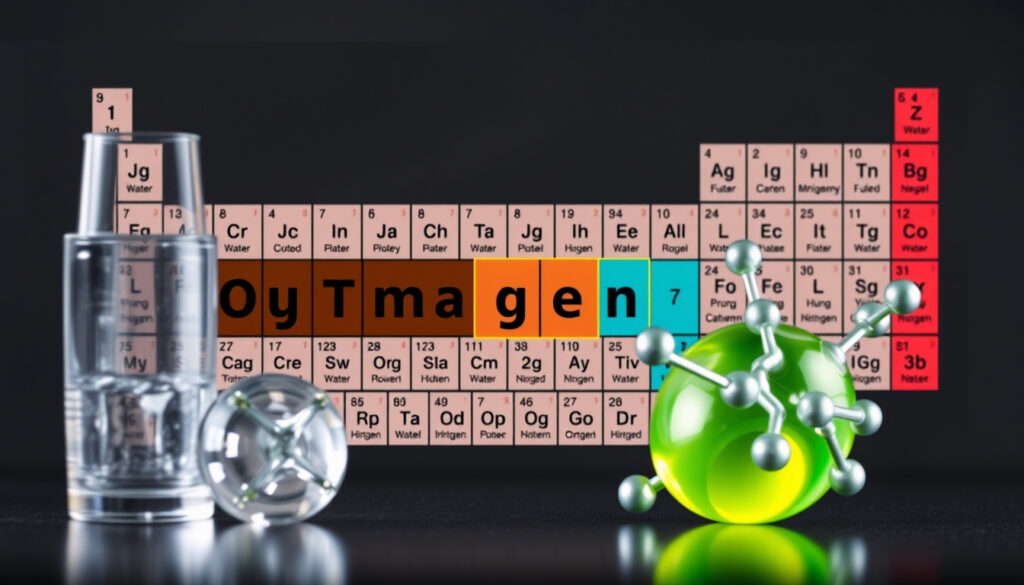
What Is an Element? Simple Definition, Types, and Examples
You’ve probably seen the periodic table in a classroom, but what defines a chemical element? Today, scientists recognize 118 known elements, each defined by the number of protons in its nucleus (IUPAC — the international authority on chemical nomenclature).
Number of known chemical elements: 118 ·
Number of naturally occurring elements: 94 ·
Year the modern periodic table was created: 1869 ·
Smallest particle maintaining element identity: Atom ·
Simplest definition property: Cannot be broken down into simpler substances
Quick snapshot
- Elements are defined by proton number (IUPAC — global authority on chemical terminology)
- There are 118 known elements (Encyclopaedia Britannica — trusted reference)
- Elements cannot be broken down by ordinary chemical processes (American Chemical Society — world’s largest scientific society)
- Whether elements can be created artificially beyond 118 under extreme conditions
- Exact number of stable isotopes for all elements (ongoing research)
- 1913: Henry Moseley defines atomic number as proton count, giving elements a precise identity (Encyclopaedia Britannica)
- 1869: Mendeleev creates the first periodic table (Encyclopaedia Britannica)
- Research continues on superheavy elements beyond oganesson (element 118)
- IUPAC may confirm new elements after sufficient experimental evidence
Five essential data points about the chemical elements, one pattern: the definition hinges on a single physical property — the number of protons in the nucleus.
| Attribute | Value |
|---|---|
| Total known elements | 118 (Encyclopaedia Britannica) |
| Natural elements | 94 (American Chemical Society) |
| First element on periodic table | Hydrogen (Encyclopaedia Britannica) |
| Most abundant element in universe | Hydrogen |
| Element definition key property | Cannot be decomposed by ordinary chemical means (American Chemical Society) |
| Group 1 elements known as | Alkali metals (Chemistry LibreTexts — educational resource) |
| Group 17 elements known as | Halogens (Chemistry LibreTexts) |
| Group 18 elements known as | Noble gases (Chemistry LibreTexts) |
| Year Mendeleev published periodic table | 1869 (Encyclopaedia Britannica) |
| Year atomic number definition established | 1913 (Encyclopaedia Britannica) |
What is a simple definition of an element?
Definition in plain language
An element is a pure substance that cannot be broken down into any other substance by chemical means (American Chemical Society). That means no heating, mixing, or dissolving will split it into something simpler. Each element consists of only one type of atom — the smallest unit that retains its identity.
The ancient Greeks thought everything was made of earth, air, fire, and water. The modern definition — one type of atom, defined by proton count — finally gave chemists a rule that actually works.
Properties of an element
- All atoms of an element have the same number of protons (IUPAC).
- Elements can be metals, nonmetals, or metalloids.
- Physical properties (melting point, density, conductivity) differ widely across elements.
The implication: no matter how you treat a pure sample of gold, it stays gold — you cannot turn it into lead by ordinary chemistry.
How to explain elements to a kid?
Elements are like the letters of the alphabet. Just as letters combine to make words, elements combine to make compounds and all the substances around us. There are about 100 different elements that make up all matter on Earth (American Chemical Society).
What best defines an element?
The two-part definition: an element is a substance made of one type of atom, and it cannot be broken down into simpler substances by ordinary chemical processes. All atoms of an element share the same number of protons (IUPAC).
What is an element in chemistry?
Chemical element definition
A chemical element is defined by the number of protons in its atomic nucleus — a value called the atomic number (IUPAC — periodic table reference). This is the single criterion that separates elements from compounds and mixtures. The American Chemical Society states that elements are the building blocks of all matter on the periodic table.
Atomic number and identity
- Hydrogen: atomic number 1 → one proton
- Carbon: atomic number 6 → six protons
- Oxygen: atomic number 8 → eight protons
If the number of protons changes, the element changes. That’s why nuclear reactions (which alter the nucleus) can transform one element into another — but ordinary chemical reactions cannot.
The pattern: The periodic table organizes these 118 substances by increasing atomic number, grouping them into families with similar chemical behavior (American Chemical Society). Groups 1, 2, 17, and 18 are among the best-known families.
Some elements — like lead — have atomic weights that vary slightly depending on where the sample was mined, because natural isotopic composition can differ (IUPAC — atomic weights 2023). But the proton count is always the same.
What are some examples of elements?
Common element examples: hydrogen, oxygen, carbon, gold
- Hydrogen (H) — the lightest element, atomic number 1. Makes up about 75% of the universe’s mass.
- Carbon (C) — atomic number 6. Backbone of organic chemistry and all known life.
- Oxygen (O) — atomic number 8. Essential for respiration; about 21% of Earth’s atmosphere.
- Gold (Au) — atomic number 79. Dense, malleable, and does not tarnish.
Examples of elements vs. compounds
Elements are the raw ingredients; compounds are combinations. Water (H₂O) is a compound made of two elements: hydrogen and oxygen. You can separate water into hydrogen and oxygen by electrolysis — but you cannot split a single atom of hydrogen into anything simpler (American Chemical Society).
The trade-off: elements are boring on their own — most reactivity comes from how they combine. The fun begins when elements bond to form compounds with entirely new properties.
Confirmed facts
- Elements are defined by proton number (IUPAC).
- There are 118 known elements (Encyclopaedia Britannica).
- Elements cannot be broken down by ordinary chemical processes (American Chemical Society).
- 94 elements occur naturally on Earth (American Chemical Society).
What’s unclear
- Whether elements can be created artificially beyond the current 118 under extreme conditions.
- Exact number of stable isotopes for all elements (ongoing research).
Key scientific perspectives
“A chemical element is a substance that cannot be broken down into simpler substances by ordinary chemical reactions.”
— Royal Society of Chemistry — the UK’s professional chemistry body
“The atomic number — the number of protons in the nucleus — is the fundamental property that identifies an element.”
— Henry Moseley, 1913, as cited by Encyclopaedia Britannica
For students learning chemistry, the choice is clear: define every element by its atomic number. The periodic table is not just a list of symbols — it’s a map of proton counts, and that single number unlocks the identity of all matter. For teachers, the implication is straightforward: when a student asks “what is an element?”, the shortest honest answer is “a substance made of atoms that all have the same number of protons.”
en.wikipedia.org, byjus.com, byjus.com, youtube.com, webelements.com, philsci-archive.pitt.edu
For a deeper look into the fundamental building blocks of matter, read our detailed guide on chemical elements and their properties.
Frequently asked questions
What is the simplest definition of an element?
An element is a pure substance that cannot be broken down into simpler substances by ordinary chemical means. It consists of only one type of atom.
How many elements are there?
There are 118 known elements on the periodic table as of 2026.
What makes one element different from another?
The number of protons in the nucleus — the atomic number. For example, hydrogen has 1 proton, helium has 2, and so on.
Can an element be broken down into something smaller?
Yes, by nuclear reactions — splitting atoms (fission) can change one element into another. But ordinary chemical reactions cannot break an element down.
What is the difference between an element and a compound?
An element is a single type of atom; a compound is two or more elements chemically bonded. Example: oxygen (O₂) is an element, water (H₂O) is a compound.
What are the first 20 elements?
Hydrogen, helium, lithium, beryllium, boron, carbon, nitrogen, oxygen, fluorine, neon, sodium, magnesium, aluminum, silicon, phosphorus, sulfur, chlorine, argon, potassium, calcium.
What element is the lightest?
Hydrogen, with atomic number 1, is the lightest element.
What is the rarest element on Earth?
Astatine is often cited as the rarest naturally occurring element, with less than 1 gram present on Earth at any time.
More related posts
 How Much is Paramount Plus in Ireland? Prices & Deals
 Cast of Hairspray 2007 – Main Actors and Roles
 How Old Was Ozzy Osbourne When He Died? Age & Cause
 How Many Kids Does NBA YoungBoy Have? 13 Kids in 2026
 Dandruff vs Dry Scalp – Key Differences, Causes and Treatments
 What Phase Is the Moon In Tonight? Current Phase & Supermoon
 Renta de Pickups Santo Domingo: Cheapest Prices & Guide
 Marquez Valdes-Scantling: Seahawks Release, Now with Cowboys
