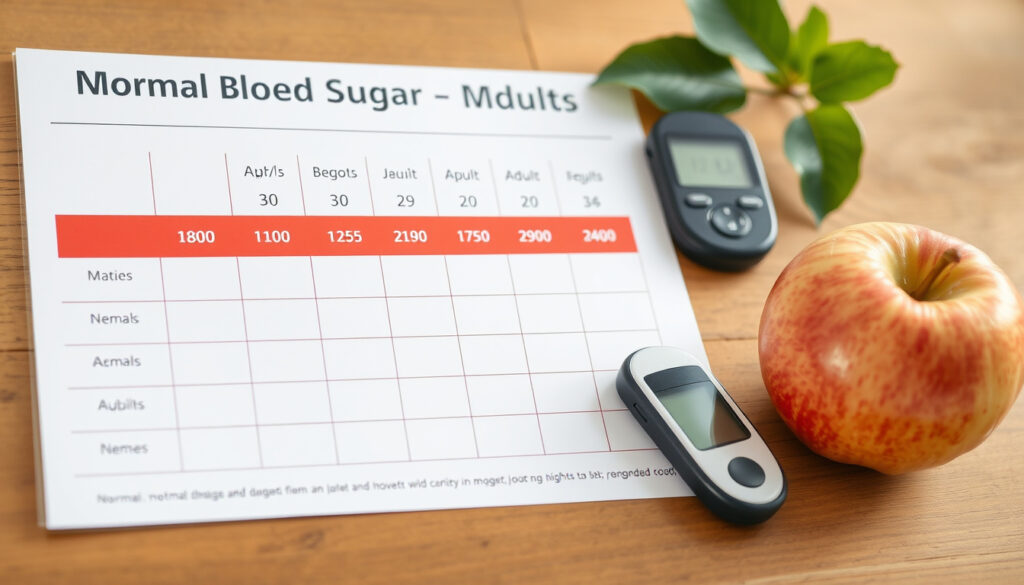
Normal Blood Sugar Levels Chart for Adults (mmol/L)
Staring at a blood sugar result and wondering whether that number means something is one of those quiet moments of uncertainty almost everyone has faced. Between different units, conflicting advice online, and charts that seem to use a different scale every time, it is no wonder people feel lost. This guide uses the mmol/L measurement standard across Ireland and the UK, drawing directly on national health authority recommendations, so you can read any normal blood sugar levels chart with real confidence.
Normal fasting glucose (adult): 4.0–5.4 mmol/L (72–99 mg/dL) · Prediabetes fasting glucose: 5.5–6.9 mmol/L (100–125 mg/dL) · Diabetes fasting glucose: ≥7.0 mmol/L (≥126 mg/dL) · Normal HbA1c: <5.7% (39 mmol/mol)
Quick snapshot
- Normal fasting glucose: 4.0–5.4 mmol/L (Mayo Clinic)
- Normal post-meal glucose: <7.8 mmol/L (British Heart Foundation)
- Normal HbA1c: <5.7% (MedlinePlus)
- Optimal ranges may differ for elderly or pregnant individuals
- Some experts recommend lower fasting targets (<5.0 mmol/L) for prevention
- Conversion formulas between HbA1c and average glucose have slight variation
- HbA1c reflects average glucose over 2–3 months (Diabetes UK)
- Fasting glucose changes within days of dietary change (Diabetes UK)
- Post-meal spikes appear within 1–2 hours of eating (Diabetes UK)
- Use a chart to compare your reading against age-appropriate targets
- If prediabetic range, lifestyle intervention can reduce progression risk
- Discuss any consistent out-of-range reading with your GP
Four key facts, one pattern: healthy blood sugar management depends on knowing which measurement you are looking at, because fasting, post-meal, and HbA1c targets are not interchangeable.
| Target population | Detail |
|---|---|
| Target population | Adults without diagnosed diabetes (unless noted) |
| Unit used in this guide | mmol/L (primary), mg/dL in parentheses |
| Source for ranges | HSE Ireland, CDC, American Diabetes Association |
| Important note | Ranges may vary by laboratory, individual health, and time of day |
What is a normal blood sugar range for adults?
Fasting blood glucose targets
- Normal: 4.0–5.4 mmol/L (72–99 mg/dL) — Mayo Clinic (US medical centre)
- NHS Scotland guidance says normal for people without diabetes is 3.5–5.5 mmol/L before meals (MyDiabetesMyWay NHS Scotland)
- A fasting reading above 7.0 mmol/L signals possible diabetes — NHS (UK health authority)
Fasting glucose is the most standardised measure because food has not influenced the result. It gives the cleanest picture of how your body handles glucose at baseline.
Post-meal blood glucose targets
- Normal 2 hours after eating: <7.8 mmol/L (<140 mg/dL) — British Heart Foundation (UK cardiovascular charity)
- NHS Scotland sets the normal post-meal ceiling at <8.0 mmol/L (MyDiabetesMyWay NHS Scotland)
- NHS patient guidance says a home reading over 11.0 mmol/L at least 90 minutes after eating is considered high — NHS
The implication: a single high reading after a large meal is not automatically alarming, provided it drops back below the threshold within two hours. Persistent elevation after eating is a stronger signal.
HbA1c targets
- Normal: <5.7% (<39 mmol/mol) — MedlinePlus (US National Library of Medicine)
- British Heart Foundation gives the normal threshold as <6.0% (<42 mmol/mol) (British Heart Foundation)
- HbA1c reflects average glucose over the previous 2–3 months — Diabetes UK
Why this matters: HbA1c does not require fasting and captures long-term control. It is the measure most clinicians rely on for diagnosis and treatment decisions.
A person with a normal fasting glucose and a normal HbA1c is almost certainly fine. The catch is that someone can have a normal fasting number but elevated post-meal spikes — a pattern that routine fasting checks alone will miss.
What is a pre-diabetic sugar level?
Fasting glucose in prediabetes
- Prediabetes fasting range: 5.5–6.9 mmol/L (100–125 mg/dL) — Mayo Clinic
- This range is sometimes called “impaired fasting glucose”
- A reading of 7.0 mmol/L or above on two separate tests indicates diabetes, not prediabetes
Prediabetes rarely produces symptoms. Many people discover it only through routine blood work.
HbA1c in prediabetes
- Prediabetes HbA1c: 5.7%–6.4% (39–46 mmol/mol) — MedlinePlus
- At 6.5% or higher, the diagnosis shifts to diabetes
- People in the prediabetic range have a heightened risk of progressing to type 2 diabetes without intervention
Risk factors for progression to diabetes
- Excess body weight, particularly around the abdomen
- Physical inactivity and a diet high in refined carbohydrates
- Family history of type 2 diabetes
- Metabolic conditions such as fatty liver — see also ALT SGPT High: Normal Range, Danger Zone, & How to Lower
The pattern: prediabetes is a reversible warning zone, not a fixed diagnosis. Lifestyle changes — even modest weight loss of 5–7% — can return glucose to normal range according to Diabetes UK.
Is 200 blood sugar normal?
What 200 mg/dL (11.1 mmol/L) means
- 200 mg/dL equals 11.1 mmol/L using the standard conversion (divide by 18)
- A single reading at this level after a very high-carb meal can occur in a non-diabetic person
- Consistent readings above 11.1 mmol/L two hours after eating meet the diagnostic criteria for diabetes — NHS
The context determines whether 200 is alarming. A random post-meal spike is different from the same number before breakfast.
Post-meal vs fasting context
- Fasting reading of 11.1 mmol/L: almost certainly diabetes — seek medical review
- Post-meal reading of 11.1 mmol/L within 1 hour: possibly normal after a large meal
- Post-meal reading of 11.1 mmol/L at the 2-hour mark: elevated and warrants investigation
When to seek medical advice
If you get a fasting reading of 200 mg/dL or above, or a random reading at that level with symptoms like thirst, frequent urination, or blurred vision, contact your GP promptly. Do not rely on a single home test for diagnosis — the NHS recommends repeat testing and a formal HbA1c assessment.
Is 8.7 blood sugar high?
Interpreting 8.7 mmol/L (156 mg/dL)
- 8.7 mmol/L is above the normal fasting ceiling of 5.4 mmol/L — Mayo Clinic
- It falls within the prediabetes fasting range (5.5–6.9 mmol/L) if taken before eating
- If taken 2 hours after eating, it exceeds the normal <7.8 mmol/L target but is below the 11.1 mmol/L diabetes threshold
The trade-off: 8.7 mmol/L is not an emergency number, but it is a clear signal that glucose regulation is not optimal.
Fasting vs random context
- Fasting 8.7 mmol/L: well above normal — suggests prediabetes or possible diabetes
- Random 8.7 mmol/L within 2 hours of eating: elevated but not diagnostic
- Random 8.7 mmol/L after 4+ hours of fasting: concerning — check with a formal fasting test
Urgency and next steps
A single 8.7 mmol/L reading does not diagnose anything. But if it appears regularly, it raises the question of whether your body is handling glucose efficiently. Persistent readings in this range should prompt a discussion with your healthcare provider and possibly an HbA1c test.
What is a 6.2 blood sugar level equal to?
6.2 mmol/L in mg/dL
6.2 mmol/L = 111.6 mg/dL (multiply by 18.0182)
This falls into the prediabetes fasting range (100–125 mg/dL) according to Mayo Clinic.
Corresponding HbA1c estimate
- Estimated HbA1c for an average glucose of 6.2 mmol/L: approximately 6.5% (48 mmol/mol)
- This estimate uses the ADAG formula: HbA1c (%) = (average glucose in mmol/L + 2.59) / 1.59
- 6.5% is the diagnostic threshold for diabetes — MedlinePlus
Implications for diabetes diagnosis
A fasting glucose of 6.2 mmol/L places you squarely in the prediabetes range. The estimated HbA1c of around 6.5% sits on the borderline of a diabetes diagnosis. This is the moment when early intervention — dietary changes, increased physical activity, and monitoring — has the most impact. For related signs of metabolic strain, see Why Am I So Tired? Causes, Red Flags & Self-Help, since unexplained fatigue is a common companion to dysregulated blood sugar.
HbA1c to estimated average glucose conversion
Eight HbA1c values, one pattern: each 1% rise in HbA1c corresponds to roughly a 1.6 mmol/L increase in average glucose, making the conversion predictable enough for daily use.
| HbA1c (%) | HbA1c (mmol/mol) | Estimated avg glucose (mmol/L) | Estimated avg glucose (mg/dL) |
|---|---|---|---|
| 5.0 | 31 | 5.4 | 97 |
| 5.5 | 37 | 6.2 | 111 |
| 6.0 | 42 | 7.0 | 126 |
| 6.5 | 48 | 7.8 | 140 |
| 7.0 | 53 | 8.6 | 154 |
| 7.5 | 59 | 9.4 | 169 |
| 8.0 | 64 | 10.1 | 183 |
| 8.5 | 69 | 10.9 | 197 |
| 9.0 | 75 | 11.8 | 212 |
| 10.0 | 86 | 13.4 | 240 |
Why this matters: the conversion table lets you move between HbA1c and daily glucose numbers. If your lab gives you an HbA1c of 7.0%, your average daily glucose has been running around 8.6 mmol/L — a figure that matters for setting day-to-day targets.
How to use a normal blood sugar levels chart
Step 1: Identify your test type
- Fasting glucose: no food or drink (except water) for at least 8 hours
- Post-meal glucose: measured 2 hours after the start of a meal
- HbA1c: no fasting required; reflects 2–3 month average
Step 2: Find the correct column on your chart
- Check whether the chart uses mmol/L (standard in Ireland, UK, Canada, Australia) or mg/dL (standard in the US)
- Conversion: 1 mmol/L = 18 mg/dL
- Use the chart that matches your device’s display unit
Step 3: Compare your result against the appropriate target
- Normal fasting: 4.0–5.4 mmol/L — MyDiabetesMyWay NHS Scotland
- Normal post-meal: <7.8 mmol/L — British Heart Foundation
- Normal HbA1c: <5.7% — MedlinePlus
Step 4: Look for patterns, not single readings
- One high reading after a celebration meal is not a crisis
- Three or more consistent out-of-range readings within a week signal a trend
- Track readings in a log or app to share with your GP
What is clear and what remains uncertain
Confirmed facts
- Normal fasting glucose for non-diabetic adults is well-established at 4.0–5.4 mmol/L (Mayo Clinic)
- HbA1c <5.7% is generally accepted as normal (MedlinePlus)
- Post-meal glucose <7.8 mmol/L is normal (British Heart Foundation)
What’s unclear
- Optimal ranges may differ for elderly or pregnant individuals
- Some experts recommend lower targets (e.g., fasting <5.0 mmol/L) for prevention
- Conversion formulas between HbA1c and average glucose have slight variation
- The exact blood sugar threshold that defines “dangerous” varies by individual and context
What experts say about blood sugar targets
For people with type 1 diabetes, the HSE recommends a fasting glucose target of 5–7 mmol/L and a before-bed target of 5–9 mmol/L.
— HSE Ireland guidance
HbA1c reflects the average amount of glucose in your blood over the last two to three months. An ideal HbA1c level for a person with diabetes is 48 mmol/mol (6.5%) or below.
— Diabetes UK (UK diabetes charity)
For people without diabetes, normal blood glucose is 3.5 to 5.5 mmol/L before meals and less than 8 mmol/L two hours after meals.
— MyDiabetesMyWay NHS Scotland
The suggested pre-meal target blood glucose range is 4.0 to 8.0 mmol/L, and the suggested 2-hour post-meal target range is 5.0 to 10.0 mmol/L.
Four authorities, four slightly different target ranges — reflecting the difference between diagnostic thresholds (what defines normal) and treatment targets (what clinicians aim for in people already diagnosed). Knowing which one you are looking at changes how you interpret the number.
A normal blood sugar levels chart gives you a framework, but no chart replaces a conversation with a healthcare professional. The most practical takeaway: understand your own reading’s context — fasting or post-meal, mmol/L or mg/dL, diagnostic criteria or treatment target — and use that context to decide whether a single number is a signal worth acting on. For anyone reading this in Ireland or the UK, the guidance is clear: a fasting glucose below 5.5 mmol/L and an HbA1c below 5.7% put you in the healthy zone. If you are above those thresholds, the choice is straightforward — act now with lifestyle changes, or wait and face a steeper climb later.
pmc.ncbi.nlm.nih.gov, diabetes.co.uk, levels.com, everlywell.com, health.harvard.edu
Frequently asked questions
What is HbA1c and how does it relate to daily blood sugar?
HbA1c measures the percentage of haemoglobin that has glucose attached to it, reflecting average blood sugar over the previous 2–3 months. It does not require fasting and is considered the gold standard for long-term glucose monitoring (MedlinePlus). Daily finger-prick tests give immediate readings, while HbA1c shows the bigger picture.
How often should I check my blood glucose levels?
For people without diabetes, routine daily checking is not necessary unless a doctor recommends it. For those with prediabetes or diabetes, checking frequency depends on treatment — people on insulin may need multiple checks per day, while those managed by diet alone may check weekly (Diabetes UK).
Can I use a blood sugar chart to diagnose diabetes?
No. A chart is a reference tool, not a diagnostic instrument. Formal diagnosis requires laboratory blood tests (fasting plasma glucose or HbA1c) repeated on two separate occasions (NHS). Home monitors are useful for tracking trends but not for diagnosis.
What is the difference between mmol/L and mg/dL?
Millimoles per litre (mmol/L) is the standard unit in Ireland, the UK, Canada, and Australia. Milligrams per decilitre (mg/dL) is used in the United States. To convert: multiply mmol/L by 18 to get mg/dL; divide mg/dL by 18 to get mmol/L. A normal fasting glucose of 5.0 mmol/L equals 90 mg/dL.
Does age affect normal blood sugar targets?
Most standard charts use adult ranges (18 years and older). Children have different targets, and some guidelines suggest slightly higher fasting targets for elderly individuals to avoid hypoglycaemia. The MyDiabetesMyWay NHS Scotland resource tailors targets by diabetes type and treatment, though age-specific population norms remain an area where guidance varies.
What are the symptoms of high blood sugar (hyperglycaemia)?
Symptoms include increased thirst, frequent urination, fatigue, blurred vision, and slow-healing cuts. The NHS advises that blood sugar above 11 mmol/L after eating or above 7 mmol/L before eating warrants attention. Severe hyperglycaemia can lead to diabetic ketoacidosis, a medical emergency.
How can I lower my blood sugar quickly if it is too high?
Drink water, take a short walk, and avoid eating additional carbohydrates until levels drop. If you take insulin, follow your prescribed correction dose. The NHS cautions against exercising if ketones are present — check with a healthcare professional for your specific plan.
Are there different charts for children and teenagers?
Yes. Children’s glucose targets differ from adult ranges and vary by age and diabetes status. The American Diabetes Association and the International Society for Pediatric and Adolescent Diabetes publish paediatric-specific guidelines. For general reference, adult charts should not be used for children without medical guidance.
More related posts
 Huawei Mate 30 Pro Review 2025: Is It Still Worth Buying?
 Hotel Jobs Near Me – Open Positions at Nearby Hotels
 Lucy in the Sky Party Dresses: Reviews & Buyer Guide
 USB-C to USB Adapter: Safety, Compatibility, and Common Issues
 Ugliest Dog in the World 2025: Winner, Breeds & History
 Anatomy of the Body: Organs, Systems & Pain Red Flags
 Inter Miami vs Cincinnati: Score, H2H, and How to Watch
 Garden of Life Probiotics – 2025 Review and Buyer’s Guide
