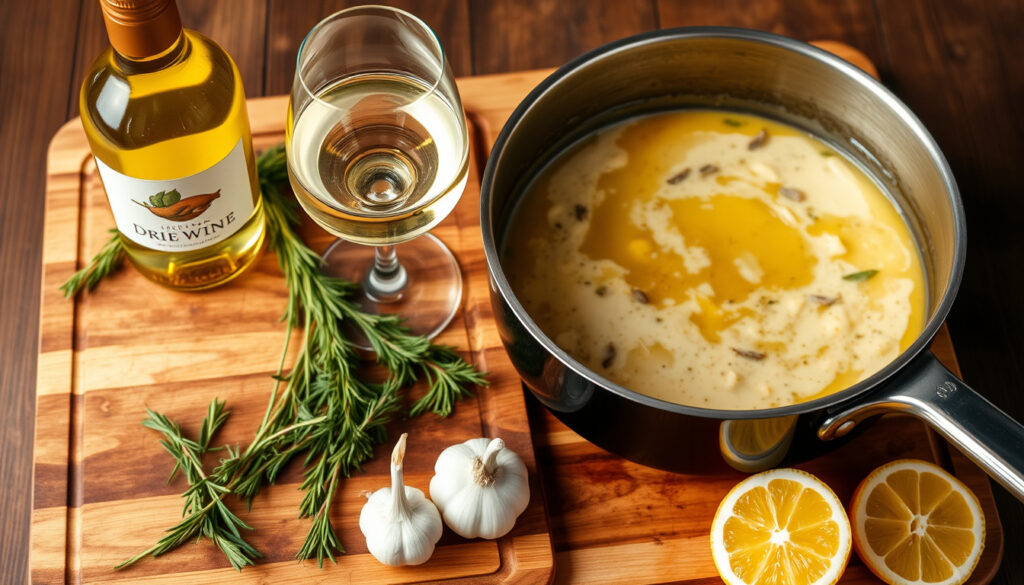
Best Dry White Wine for Cooking: 5 Top Picks & Substitutes
Standing over a hot pan, recipe in hand, wondering which bottle to grab? Dry white wine is a secret weapon for deglazing, tenderizing, and brightening sauces — but pick the wrong one, and you might end up with a sweet, heavy dish. A good rule is to choose a wine you would be happy drinking, not one labeled “cooking wine,” which often packs unwanted salt and additives (Bonterra Organic Estates). Here’s how to pick the right variety, understand the 20-minute rule, and find substitutes when the pantry is bare.
Common dry white varieties: Sauvignon Blanc, Pinot Grigio, Unoaked Chardonnay ·
Average alcohol content: 12–14% ·
Acidity level (pH): 3.0–3.5 ·
Ideal cooking time (20-minute rule): 20 minutes minimum ·
Shelf life after opening: 3–5 days refrigerated
Quick snapshot
- Dry white wine adds acidity and brightness to dishes (Bonterra Organic Estates)
- Sweet wines should be avoided for savory cooking (WSJ Wine)
- Sauvignon Blanc and Pinot Grigio are suitable dry options (WSJ Wine)
- Exact pH level required for optimal deglazing is not yet standardized (Wine Folly)
- Whether organic wines perform differently than conventional still lacks robust comparison data (Bonterra Organic Estates)
- 0–5 minutes: Wine added; alcohol begins to evaporate (Purdy’s Wine)
- 10–15 minutes: Harsh alcohol notes diminish; acidity persists (Purdy’s Wine)
- 20+ minutes: Wine fully integrates; flavor mellowed (Purdy’s Wine)
- Choose a dry wine with residual sugar below 10 g/L (Wine Folly)
- Substitute with broth and a splash of vinegar if no wine is on hand (Surely)
- Apply the 20-minute rule for any dish that simmers (Wine Folly)
Four key numbers, one pattern: dry white wine performs best when it balances acidity and low residual sugar.
| Label | Value |
|---|---|
| Ideal residual sugar | Less than 10 g/L (Wine Folly) |
| pH of typical dry white | 3.0–3.5 (Wine Folly) |
| Alcohol evaporates after | ~15 minutes of simmering (Purdy’s Wine) |
| Best price range for cooking | $8–$15 per bottle (Bonterra Organic Estates) |
What do I use when a recipe calls for dry white wine?
Common dry white wine varieties for cooking
- Sauvignon Blanc – high acidity, grassy notes, great for light sauces (WSJ Wine)
- Pinot Grigio – mild, neutral, works in delicate fish dishes (Bonterra Organic Estates)
- Unoaked Chardonnay – dry, subtle fruit, safe for cream-based dishes (WSJ Wine)
The trade-off: bold wines overpower delicate proteins; neutral wines disappear into robust stews. Match the wine to the dish’s intensity.
Best substitutes for dry white wine
- White wine vinegar + water: Use 1 tablespoon vinegar per cup of broth to mimic acidity (Surely)
- Chicken or vegetable broth: Lacks acidity, so add a squeeze of lemon (Surely)
- White grape juice + lemon juice: For sweeter recipes only (Surely)
Why this matters: skipping wine altogether works for small amounts (¼ cup or less), but omitting it from a deglazing step loses the browned-bit magic (Surely).
How to choose a wine based on dish
- For chicken: a crisp Sauvignon Blanc or a mineral-driven Pinot Grigio.
- For seafood: a light, unoaked white with high acidity — think Muscadet or Albariño.
- For risotto: a dry, unoaked Chardonnay or a neutral Pinot Grigio (WSJ Wine).
- For cream sauces: a wine with lower acidity, such as an unoaked Chardonnay, to avoid curdling.
The pattern: the lighter the protein, the sharper the wine should be; the richer the sauce, the fuller the wine.
Home cooks who match the wine’s body to the dish’s weight prevent two common failures: a wine that overpowers or one that disappears entirely.
Is Pinot Grigio or Sauvignon Blanc better for cooking?
Acidity and flavor profiles
Sauvignon Blanc typically clocks a pH of 3.0–3.3, making it sharply acidic, while Pinot Grigio sits near 3.3–3.5 (Wine Folly). That half-point difference matters in the pan: higher acidity cuts through fat and preserves the vibrancy of vegetables.
| Attribute | Pinot Grigio | Sauvignon Blanc |
|---|---|---|
| Acidity | Medium-high (pH 3.3–3.5) | High (pH 3.0–3.3) |
| Flavor intensity | Mild, pear, citrus | Grassy, grapefruit, herbal |
| Best for | Delicate fish, cream sauces | Chicken, vegetables, deglazing |
| Avg. price (cooking) | $8–$14 | $9–$15 |
The implication: if you want a wine that adds a bright backbone without announcing itself, go Sauvignon Blanc. For a wine that simply adds moisture without dictating flavor, reach for Pinot Grigio.
Which pairs better with chicken, seafood, or cream sauces
- Chicken: Sauvignon Blanc’s acidity cuts the meat’s richness (The Kitchn)
- Seafood (mussels, white fish): Pinot Grigio’s mildness doesn’t clash with subtle brininess (Purdy’s Wine)
- Cream sauces: Pinot Grigio is less likely to curdle than a high-acid Sauvignon Blanc (Bonterra Organic Estates)
Cost and availability considerations
Both varieties are widely available at grocery stores and typically fall within the $8–$15 cooking sweet spot (Bonterra Organic Estates). Avoid “cooking wine” from the condiment aisle — it carries added salt and preservatives that can throw off a dish’s balance (Bonterra Organic Estates).
What does dry white wine do for cooking?
Deglazing and building flavor
When you pour wine into a hot pan after searing meat, it lifts the browned bits (fond) from the bottom — that’s deglazing. The wine’s acidity dissolves the caramelized proteins, creating the foundation for a pan sauce (WSJ Wine).
Acidity as a tenderizer and flavor enhancer
Acid in wine can slightly denature proteins, making meat more tender. It also balances the fat in sauces and cuts the richness of butter or cream (Wine Folly). A splash of dry white wine lifts a dish the way a squeeze of lemon does, but with more complexity.
Alcohol evaporation and flavor concentration
Most of the alcohol burns off after about 15 minutes of simmering (Purdy’s Wine). What remains is the wine’s fruit, acid, and subtle tannins — concentrated by evaporation. For a richer flavor, Purdy’s Wine recommends simmering until the liquid is reduced by half (Purdy’s Wine).
“Acidity is the single most important factor in a cooking wine. It brightens the whole plate.”
— Madeline Puckette, Wine Folly
“I always keep a bottle of Sauvignon Blanc in the kitchen — it does double duty for drinking and cooking.”
— Food editor, The Kitchn
Many home cooks treat wine as an optional step. In fact, it’s one of the fastest ways to add depth: ¼ cup of a good dry white can transform a simple pan sauce into something that tastes braised for hours.
The pattern: dry white wine’s acidity and alcohol evaporation make it a versatile cooking liquid that adds complexity without overpowering.
What is the best dry white wine for cooking?
Top recommended wines under $15
- Unoaked Chardonnay – dry, medium acidity, works in cream sauces and risotto
- Sauvignon Blanc – high acidity, ideal for deglazing and seafood
- Pinot Grigio – neutral, great as a universal substitute
- Torrontés or Semillon – dry, aromatic, excellent for chicken
Bonterra Organic Estates suggests that any wine in the $8–$15 range that you’d enjoy drinking will perform well in the pan.
The implication: personal taste and price are good guides when choosing a cooking wine.
Wines to avoid: sweet, oaked, or overly complex
- Sweet wines (Riesling, Moscato, Gewürztraminer) – residual sugar can caramelize and make sauces cloying (WSJ Wine)
- Heavily oaked Chardonnay – oak compounds can turn astringent when simmered (WSJ Wine)
- “Cooking wine” from the grocery aisle – added salt (up to 80 mg per tablespoon) and preservatives throw off seasoning (Bonterra Organic Estates)
Organic options like Bonterra
Bonterra Organic Estates offers a Sauvignon Blanc and a Chardonnay that are both certified organic and widely available. The winery emphasizes that their grapes are grown without synthetic pesticides, and the resulting wines have clean, vibrant flavors that translate well into cooking (Bonterra Organic Estates).
What is the 20 minute wine rule?
What the rule means for cooking
The 20-minute rule states that wine should simmer for at least 20 minutes before serving a dish. This ensures the alcohol has largely evaporated (after ~15 minutes) and the wine’s flavor has mellowed into the sauce (Purdy’s Wine).
How to apply when simmering sauces
- Add wine after browning aromatics.
- Bring to a simmer and let it reduce by half.
- Add stock or cream and cook for at least 20 minutes total.
- Taste before seasoning — the wine’s residual salt or acid might already balance the dish.
The Kitchn advises that short simmer times (under 10 minutes) can leave a harsh alcohol bite, so plan dishes that allow a longer cook (The Kitchn).
Does it apply to all dishes?
Not strictly. Quick-cook dishes like mussels in white wine sauce (5–7 minutes covered) are fine because the wine is not the sole liquid — it’s quickly absorbed by the shellfish and the dish is served immediately (Purdy’s Wine). For risotto, the wine is added after toasting the rice and cooked until absorbed before more liquid is added, which takes about 2–3 minutes — but the total risotto cooking time usually exceeds 20 minutes (WSJ Wine).
If you’re making a pan sauce that comes together in under 10 minutes, use less wine and let it reduce aggressively, or choose a milder wine like Pinot Grigio to avoid harshness.
The pattern: the 20-minute rule is a reliable benchmark for most sauces, but quick-cook dishes can bend it.
Confirmed facts vs. what’s unclear
Confirmed facts
- Dry white wine adds acidity and brightness to sauces (Bonterra Organic Estates)
- Sweet wines should be avoided for savory cooking (WSJ Wine)
- Alcohol largely evaporates after ~15 minutes of simmering (Purdy’s Wine)
- Sauvignon Blanc and Pinot Grigio are safe, dry choices (WSJ Wine)
What’s unclear
- Exact pH threshold needed for optimal deglazing is not yet standardized (Wine Folly)
- Whether organic wines perform differently than conventional in terms of flavor persistence (Bonterra Organic Estates)
- The 20-minute rule’s applicability to all cooking methods is context-dependent (Purdy’s Wine)
- The exact alcohol evaporation rate is not consistent across all cooking conditions (Purdy’s Wine)
“For everyday cooking, a Sauvignon Blanc or a dry Pinot Grigio is all you need. Save the oaky stuff for drinking.”
— Food editor, The Kitchn
The evidence is clear: choosing a dry white wine with low residual sugar, moderate acidity, and no oak is the safest bet for savory dishes. The 20-minute rule gives home cooks a concrete benchmark to avoid raw alcohol notes. For the occasional cook without wine in the house, a broth-and-vinegar substitute works — but the real magic of deglazing and flavor depth comes from the real thing. For anyone cooking chicken, seafood, or risotto this week, the best move is to grab a $12 bottle of Sauvignon Blanc, pour a glass for yourself, and let the rest work its way into the pan.
For a reliable cooking wine, consider a bottle like the one featured in our Santa Margherita Pinot Grigio review, which offers the crisp acidity needed for deglazing and sauces.
Frequently asked questions
Can I use red wine instead of dry white wine in a recipe?
Yes, but the flavor will be heavier and the sauce may turn brown. Red wine works in tomato-based or mushroom sauces, but avoid it in light or cream sauces.
How should I store leftover dry white wine for cooking?
Seal the bottle tightly and refrigerate. Use within 3–5 days. For longer storage, freeze wine in ice cube trays and pop a cube into sauces as needed.
Is it necessary to use wine in cooking, or can I skip it?
For small amounts (¼ cup or less), you can skip it or substitute with broth and a splash of vinegar. But for deglazing and depth, wine adds irreplaceable complexity.
What is the difference between ‘cooking wine’ and regular dry white wine?
Cooking wine often contains added salt and preservatives, which can ruin a dish’s seasoning. Regular dry white wine is always the better choice.
Does dry white wine expire? How long can I keep an opened bottle?
Once opened, it stays usable for cooking for about 3–5 days in the fridge. After that, it may oxidize and taste flat, but it won’t harm the dish if used promptly.
Can I use dry vermouth as a substitute for dry white wine?
Yes, dry vermouth is a fortified wine with a similar acidity and flavor profile. Use it 1:1 in recipes, but note it may add herbal notes.
More related posts
 Sammy Steal a Brainrot: Real Name, Net Worth & Contact
 Bucked Up Energy Drink: Caffeine, Side Effects & Safety
 Benefits of Green Tea: What Happens When You Drink It Daily
 Northwe tern v Penn State: Hi tory, Rivalrie & 2025 Up et
 Pacers vs Detroit Pistons Match Player Stats – 2024 Box Scores and Key Stats
 Cole Young Mortal Kombat: Who He Is, Powers & Scorpion Link
 The Better Sister Cast: Full List, Characters & Answers
 Why Is Savannah Guthrie Trending Today? Mother Missing
