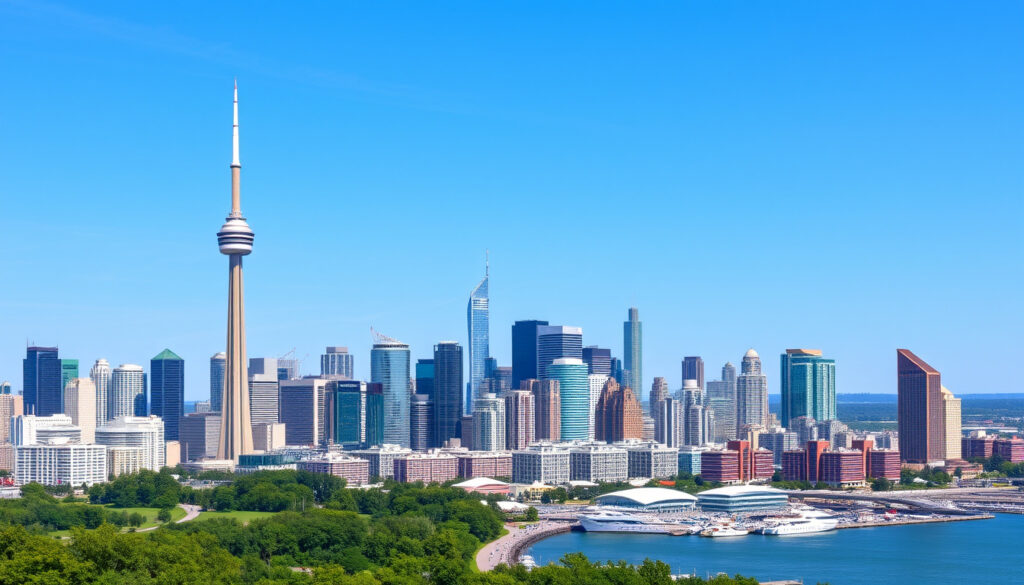
Things to Do in Toronto: Top Attractions & Itineraries
You’ve finally booked that trip to Toronto, and now the real question hits: where do you even start? With a city that draws well over 28 million visitors each year, the hardest part isn’t finding things to do—it’s narrowing them down. This guide walks you through the landmarks, neighbourhoods, and day trips that define the city, backed by official tourism data and local insights, so you can spend less time planning and more time exploring.
CN Tower height: 553.3 m ·
Royal Ontario Museum: Canada’s largest museum ·
Kensington Market: National Historic Site since 2006 ·
Best weather month: July (avg high 27 °C)
Quick snapshot
- CN Tower stands 553.3 m tall (Watch Me See)
- Royal Ontario Museum is the largest museum in Canada (Short Girl Travels)
- Kensington Market has been a National Historic Site since 2006 (Joey Is a Traveler)
- Exact annual visitor count varies; Destination Toronto reports “over 28 million” in 2024 (Destination Toronto)
- Safety perceptions of neighborhoods change year to year – check Toronto Police Service crime map (Destination Toronto)
- Best to visit in summer (June–August) for festivals and warmth (TripAdvisor)
- Winter offers ice skating at Nathan Phillips Square and indoor markets (TripAdvisor)
- Plan a day trip to Niagara Falls (130 km south) – feasible with early start (Destination Toronto)
- Consider a CityPASS to save on top attractions (JoAnna E)
The table below consolidates essential Toronto statistics from official and travel sources.
| Fact | Value | Source |
|---|---|---|
| Population | 2.9 million (city proper) | City of Toronto (est.) |
| Country | Canada | Destination Toronto |
| Province | Ontario | Destination Toronto |
| Official tourism board | Destination Toronto | Destination Toronto (trip ideas hub) |
| Major airport | Toronto Pearson International Airport (YYZ) | Greater Toronto Airports Authority |
| Time zone | EST (UTC -5) | Time and Date |
What should I not miss in Toronto?
Iconic landmarks: CN Tower, Royal Ontario Museum
Start at the CN Tower, which at 553.3 m offers panoramic views of the city from its observation deck (Watch Me See). Opened in 1976, it held the record for the world’s tallest free-standing structure until 2007 (Joey Is a Traveler). A few blocks north, the Royal Ontario Museum is Canada’s largest museum by collection size (Short Girl Travels).
Cultural neighbourhoods: Kensington Market, Distillery District
Kensington Market has been a National Historic Site since 2006 and becomes pedestrian-only on the last Sunday of each month (excluding winter), making it perfect for strolling (Joey Is a Traveler). The Distillery District charms with Victorian industrial architecture, art galleries, and seasonal markets.
Nature and water: Toronto Islands, High Park
A 15-minute ferry from downtown brings you to the Toronto Islands, offering unbeatable skyline views and recreational activities – picnics, canoe rentals, and cycling (Joey Is a Traveler). Back on the mainland, High Park is a 400-acre green space with a free zoo and cherry blossoms that peak in late April (TripAdvisor).
First-time visitors who hit all three zones – downtown landmarks, cultural enclaves, and waterfront nature – get the most honest picture of Toronto’s layered identity.
The implication: focusing on these three zones creates a compact yet comprehensive first visit.
Is 3 days in Toronto enough?
Suggested 3-day itinerary for first-time visitors
- Day 1: Downtown core – CN Tower (TripAdvisor), Ripley’s Aquarium, St. Lawrence Market for the famous peameal bacon sandwich.
- Day 2: Museums and neighbourhoods – Royal Ontario Museum (Short Girl Travels), Kensington Market, Art Gallery of Ontario.
- Day 3: Day trip or explore Scarborough Bluffs – Niagara Falls or stay in town for the Bluffs’ dramatic views.
How to pace activities without rushing
Three days allow you to cover the top 10 attractions with a balanced pace, but it’s enough for highlights, not deep exploration (Short Girl Travels). Using a CityPASS can save on entry fees to the CN Tower, Ripley’s Aquarium, and more (JoAnna E). Stay downtown for easy access via subway and streetcar (JoAnna E).
If you try to cram in a Niagara Falls day trip plus all three core zones, you’ll spend more time in transit than actually exploring. Choose either the falls or the city’s eastern attractions.
The pattern: three days works best if you commit to either a city-focused or a falls-focused itinerary, not both.
What are the top 10 attractions in Toronto?
These are the most-cited must-sees across travel guides and visitor reviews (TripAdvisor):
- CN Tower – panoramic views from 346 m (EdgeWalk at 356 m is an extra paid experience, per Watch Me See)
- Royal Ontario Museum – largest museum in Canada (Short Girl Travels)
- Ripley’s Aquarium of Canada – popular indoor attraction
- Art Gallery of Ontario – major art museum
- Toronto Islands – ferry-accessible park with skyline backdrop
- Distillery District – cobblestone arts and dining area
- St. Lawrence Market – historic food market (highly rated on TripAdvisor)
- Kensington Market – pedestrian-friendly arts district
- Casa Loma – Gothic Revival castle and gardens
- High Park – free zoo, cherry blossoms, sports fields
Eight of these ten are either free or offer free days. Budget-conscious visitors can easily tick off half the list without spending a dime on entry.
The implication: a cost-effective Toronto visit is more accessible than many assume.
What month is best to visit Toronto?
Weather by season
- Summer (June–August): Warmest, with July averaging 27 °C highs (TripAdvisor). Peak tourist season and festival-packed.
- Spring (April–May) & Fall (September–October): Mild temperatures, fewer crowds, stunning foliage or cherry blossoms.
- Winter (December–March): Cold but lively – ice skating at Nathan Phillips Square, indoor markets, holiday lights.
Event highlights per month
The NXNE Music & Gaming Festival runs for 10 days in June (Joey Is a Traveler). September brings the Toronto International Film Festival (TIFF). If you want the warmest weather and largest festivals, July and August are your months; for lower prices and fewer queues, choose late May or early October.
The peak summer crowds mean longer waits at the CN Tower and pricier hotels. Shoulder months offer a quieter Toronto with the same great food and neighbourhood walks.
The pattern: your ideal month depends on whether you prioritize warm weather or lower costs and shorter lines.
Is Niagara Falls a day trip from Toronto?
Transportation options
The falls are 130 km south of Toronto. Driving takes about 1.5 hours each way (Destination Toronto). The GO Train also runs seasonal service to Niagara Falls, and dozens of bus tours operate daily. A day trip is feasible, but you’ll need to leave by 7 am to make the most of it.
Typical day trip itinerary
- Depart Toronto around 7 am (drive or train)
- Spend 3–4 hours at the falls (Horseshoe Falls, boat cruise, Skylon Tower view)
- Lunch on Clifton Hill
- Return by 5–6 pm
If you want to add wineries in Niagara-on-the-Lake, consider an overnight stay.
The catch: a day trip is logistically possible but leaves little room for spontaneous detours. Overnight stays provide a richer experience.
Clarity check
Confirmed facts
- CN Tower height: 553.3 m (Watch Me See)
- Royal Ontario Museum is Canada’s largest museum (Short Girl Travels)
- Kensington Market is a National Historic Site (Joey Is a Traveler)
- Niagara Falls is 130 km from Toronto (Destination Toronto)
- July is the warmest month (avg high 27 °C) (TripAdvisor)
What’s unclear
- Exact annual visitor count – Destination Toronto reports “over 28 million” but figures vary across sources
- Neighbourhood safety ratings change yearly; consult the Toronto Police Service crime map for current data
What locals and experts say
Toronto’s diversity is its biggest asset. You can eat your way through a dozen cuisines in a single afternoon, and the city’s neighbourhoods each feel like a different world.
— Destination Toronto, official tourism board
The best advice I give to first-timers is to buy a day pass for the TTC and stay downtown. You’ll save time and money on transit.
— JoAnna E, travel blogger
Three days is enough for the highlights, but not for the hidden gems. If you can add a fourth day, use it for a neighbourhood deep-dive like Leslieville or The Junction.
— Short Girl Travels, itinerary specialist
För den som reser på en budget finns det också gott om budgetvänliga alternativ i Toronto som passar utmärkt för både barnfamiljer och studenter.
Frequently asked questions
What is the best way to get around Toronto?
The TTC subway, streetcars, and buses are reliable. A day pass gives unlimited rides (JoAnna E). Walking is ideal for downtown exploration.
How much does a day in Toronto cost?
Budget roughly $100–150 CAD per person for meals, transit, and one paid attraction. Many top attractions are free or donation-based.
Is Toronto safe for solo travelers?
Yes – Toronto is considered safe, especially in tourist areas. Use common sense and check the Toronto Police crime map for up-to-date neighbourhood info.
What are the top free attractions in Toronto?
High Park, Toronto Islands, Kensington Market, St. Lawrence Market (window shopping), and walking trails along the Waterfront.
Which Toronto neighborhoods are best for families?
Yorkville (upscale, museums), the Beaches (lakeside, playgrounds), and Harbourfront (waterfront parks).
Can I see Niagara Falls and Toronto in one day?
Yes, but you’ll need an early start. The drive is 1.5 hours each way (Destination Toronto). Bus tours are also available.
What is Toronto known for food-wise?
Peameal bacon sandwiches at St. Lawrence Market, multicultural eats in Kensington Market, and a thriving food truck scene.
Are there tours from Toronto to Niagara Falls?
Yes – multiple bus tour operators offer daily round trips. Prices range from $50–80 CAD per person.
More related posts
 Coin Laundry Near Me: Dublin Prices & Tips
 Marquez Valdes-Scantling: Seahawks Release, Now with Cowboys
 Huawei Mate 30 Pro Review 2025: Is It Still Worth Buying?
 How to Identify Scabies – Burrows, Rash and Night Itch Guide
 Chappell Roan Grammy Outfit: Prosthetic Nipples Explained
 Bucked Up Energy Drink: Caffeine, Side Effects & Safety
 Best Breakfast Sandwiches Near Me in Dublin: Guide
 Rachel Nichols Jimmy Butler – Heat Players Reach Breaking Point
