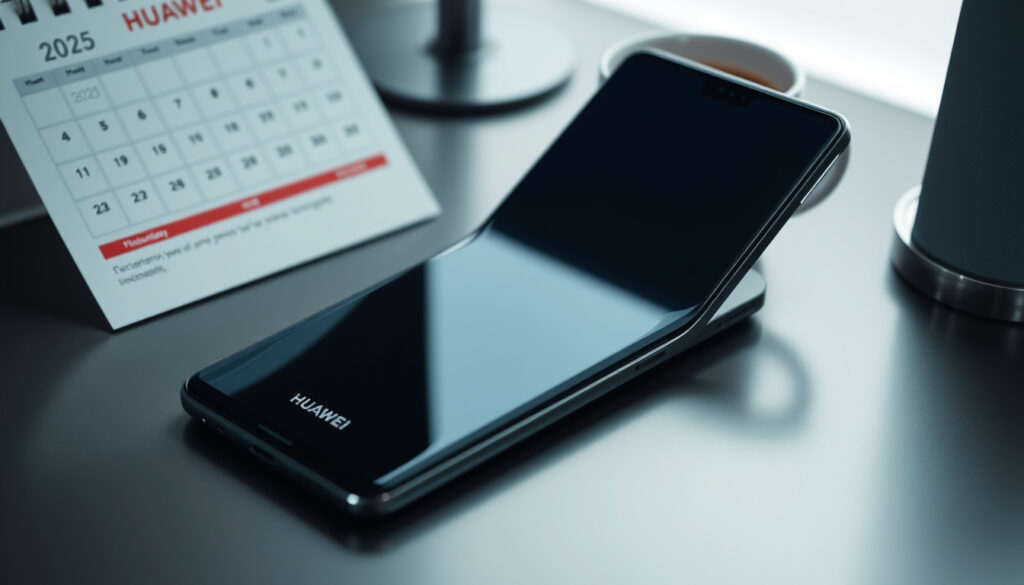
Huawei Mate 30 Pro Review 2025: Is It Still Worth Buying?
Few phones spark as much curiosity five years after launch as the Huawei Mate 30 Pro. It arrived in September 2019 as a hardware beast — Kirin 990 chip, 4500 mAh battery, quad cameras — but US sanctions meant it shipped without Google Mobile Services. Today, with refurbished units going for around $200, the question is practical: does the hardware still hold up, and can you really live without Google Play?
Announced: September 2019 ·
Display: 6.53-inch OLED, 1176×2400 ·
Processor: Kirin 990 (7nm) ·
Battery: 4500 mAh, 40W wired ·
RAM / Storage: 8GB / 128GB or 256GB ·
OS (original): Android 10 with EMUI 10
Quick snapshot
- Announced September 2019, released October 2019 (Huawei official community)
- Quad-camera: 40MP main, 8MP telephoto, 40MP ultrawide, 3D depth sensor (YouTube tech review)
- Battery capacity 4500 mAh, 40W wired charging (Huawei official community)
- Exact used price varies widely by region and condition
- Effectiveness of third-party Google workarounds changes with each software update
- Battery health of individual units after 5+ years is unknown without inspection
- 2019: Launch with Android 10 (EMUI 10) (Huawei official community)
- 2022: Final major OS update to Android 12 (EMUI 12) (YouTube tech review)
- 2023: Classified as obsolete by Huawei; security patches ended (Huawei obsolete products list)
- No further OS or security updates from Huawei
- Third-party app stores (App Gallery, Aurora) remain the primary software channel
- Used market price expected to drop further as parts age
The Mate 30 Pro offers 2025 buyers flagship-grade hardware for under $250 — but the software compromise is real: no Google Play, no security patches, and workarounds that need regular tinkering.
Here are the key hardware specifications at a glance.
| Announced | September 2019 |
| Dimensions | 158.1 x 73.1 x 8.8 mm |
| Weight | 198 g |
| Chipset | Kirin 990 (7nm) |
| GPU | Mali-G76 MP16 |
| RAM | 8 GB |
| Storage | 128 GB / 256 GB |
| Battery | Li-Po 4500 mAh, non-removable |
| Display Type | OLED, HDR10 |
| Protection | Corning Gorilla Glass (unspecified version) |
| Main Camera | 40 MP (wide), 8 MP (telephoto), 40 MP (ultrawide), 3D ToF |
| Selfie Camera | 32 MP (wide) |
| OS | Android 10, EMUI 10 (up to Android 12, EMUI 12) |
| Colors | Space Silver, Cosmic Purple, Emerald Green, Black, Orange (vegan leather), Forest Green (vegan leather) |
How old is the HUAWEI Mate 30 Pro?
Release date and launch timeline
- Announced at IFA 2019 in September, global release followed in October 2019 (Huawei official community).
- It launched with Android 10 and EMUI 10, receiving updates to Android 11 (EMUI 11) in 2020 and Android 12 (EMUI 12) in 2022 (YouTube tech review).
- In 2023, Huawei classified the Mate 30 Pro as an obsolete product, ending all software support and security patches (Huawei obsolete products list).
How its age affects performance in 2025
A phone from 2019 faces two hard limits: battery chemistry and software relevance. Even if the Kirin 990 still handles daily tasks smoothly, the 4500 mAh cell likely degraded to around 80% of original capacity after 5-6 years of use. Without security patches, the device is also more exposed to newly discovered vulnerabilities. As Huawei noted in their obsolete product list (official community), no further fixes are coming.
The implication: a Mate 30 Pro bought used in 2025 is a gamble on battery health and a deliberate choice to accept an unpatched operating system.
What is the price of HUAWEI Mate 30 Pro?
Original MSRP vs current used price
The Mate 30 Pro launched at around €1,099 in Europe — roughly $1,200 at the time. As of 2025, the used market has corrected sharply. Refurbished units in good condition sell for $150 to $300 depending on storage variant and cosmetic wear.
Price in different regions
In Kenya, the Mate 30 Pro appears on platforms like Jiji at KSh 25,000–35,000 (roughly $190–270). In India, import-dependent resellers ask ₹12,000–₹18,000. Price varies wildly by local demand and availability of workaround tools.
A $200 Mate 30 Pro competes directly with budget phones like the Redmi Note 11S 5G. The Huawei offers superior camera hardware and a curved OLED screen, but the budget phone delivers Google services and security updates out of the box. Buyers are trading software peace of mind for flagship-grade hardware.
The price alone makes the Mate 30 Pro a tempting option for buyers who prioritize hardware over software convenience.
Does the HUAWEI Mate 30 Pro support Google?
Google services availability out of the box
The Mate 30 Pro does not come with Google Mobile Services (GMS) pre-installed due to US trade restrictions imposed in 2019. There is no Google Play Store, no Gmail app, no Google Maps, and no YouTube app from the factory. Huawei confirmed this limitation on its official community forum (Huawei support).
Workarounds to install Google apps
Several third-party tools have emerged to bridge the gap:
- GBox: Enables Google Play Store installation on Huawei devices without a PC. Setup reportedly takes about one minute (YouTube tutorial).
- Aurora Store: An open-source client that accesses Google Play’s app database without requiring Google Play Services. It uses the same security settings as the official store (YouTube installation guide).
- MicroG Services + MicroG Companion: Required components for signing into Google accounts on Huawei devices, as demonstrated on the Mate X6 (YouTube guide 2025).
- Gmail can be accessed through the native email app with a Google authorization redirect (YouTube tech review).
Impact on daily use
Even with workarounds, some friction remains. Banking apps that rely on Google Play Integrity checks may refuse to run. WhatsApp reportedly requires a backup before initial installation (YouTube tech review). Restricted apps like Instagram, LinkedIn, and Discord can be installed but may lack push notifications.
Workarounds like GBox and Aurora Store are not official solutions. Google could change its authentication protocols at any time, breaking access. Users who rely on Google services for work or banking should consider this a temporary patch, not a permanent fix.
What’s special about the Mate 30 Pro?
Display and design innovations
The 6.53-inch OLED panel with 1176×2400 resolution and HDR10 support was class-leading in 2019. The curved “Horizon Display” wraps around the edges, and the notch houses a 3D face unlock system. Gorilla Glass protection covers both front and back.
Camera system
Four rear cameras: a 40MP main sensor, an 8MP telephoto (3x optical zoom), a 40MP ultrawide, and a 3D Time-of-Flight depth sensor. The 32MP front camera supports 4K video. In its day, the Mate 30 Pro ranked among the top camera phones globally.
Kirin 990 chipset
Built on a 7nm process, the Kirin 990 integrates an octa-core CPU and Mali-G76 MP16 GPU. It supports 5G on the 5G variant. Benchmarks from the period placed it near the Snapdragon 855+ in CPU performance and ahead in AI processing.
Battery and charging
4500 mAh capacity with 40W wired fast charging (0–70% in about 30 minutes) and 27W wireless charging. Reverse wireless charging at 10W lets it top up earbuds or other phones.
The pattern across all these features: Huawei built a device that, on paper, still matches or beats many 2025 mid-range phones. But that hardware was designed for a software ecosystem it can no longer fully access.
How many years can a Huawei phone last?
Typical lifespan of Huawei flagship phones
Huawei flagships traditionally receive 2–3 major Android upgrades and 3–4 years of security patches. The Mate 30 Pro followed this pattern: Android 10 → 11 → 12, with security patches stopping in 2023.
Battery degradation over time
Lithium-ion batteries typically drop to 80% of original capacity after 300–500 full charge cycles — roughly 2–3 years of daily use. A Mate 30 Pro purchased new in 2019 and used daily likely now holds around 3000–3600 mAh of effective capacity.
Software update policy
Huawei’s official policy classifies devices as “obsolete” once they stop receiving security patches and repairs. The Mate 30 Pro entered this category in 2023. No further software updates are planned, and parts availability through Huawei channels is limited.
| Specification | Detail |
|---|---|
| SoC | Kirin 990 (7nm) |
| CPU | Octa-core (2×2.86 GHz Cortex-A76 + 2×2.09 GHz Cortex-A76 + 4×1.86 GHz Cortex-A55) |
| GPU | Mali-G76 MP16 |
| RAM | 8 GB LPDDR4X |
| Storage | 128 GB / 256 GB UFS 3.0 + NM card up to 256 GB |
| Display | 6.53″ OLED, 1176×2400, HDR10 |
| Rear Camera 1 | 40 MP, f/1.6, 27mm (wide), OIS |
| Rear Camera 2 | 8 MP, f/2.4, 80mm (telephoto), 3x optical zoom, OIS |
| Rear Camera 3 | 40 MP, f/1.8, 18mm (ultrawide) |
| Rear Camera 4 | 3D ToF depth sensor |
| Front Camera | 32 MP, f/2.0, 26mm (wide) |
| Battery | 4500 mAh, 40W wired, 27W wireless, 10W reverse wireless |
| OS (ship) | Android 10, EMUI 10 |
| OS (max) | Android 12, EMUI 12 |
| Water resistance | IP68 (1.5 m for 30 min) |
| Connectivity | Wi-Fi 6, Bluetooth 5.1, NFC, USB-C 3.1 |
| 5G variant | Yes (Kirin 990 5G model) |
Upsides
- Flagship-grade OLED display with HDR10
- Versatile quad-camera system that still impresses
- 4500 mAh battery with fast wired and wireless charging
- Premium build with IP68 water resistance
- Used prices below $300 deliver tremendous hardware value
Downsides
- No Google Mobile Services out of the box
- Security patches ended in 2023
- No further OS updates beyond Android 12
- Battery health unknown on used units
- Banking apps may fail due to missing Play Integrity checks
Clarity check
Confirmed facts
- Announced September 2019, released October 2019 (Huawei official community)
- No Google Mobile Services pre-installed (Huawei official community)
- Final OS update was Android 12 (EMUI 12) in 2022 (YouTube tech review)
- Battery capacity: 4500 mAh (non-removable) (Huawei official community)
- Kirin 990 chipset (7nm) with Mali-G76 GPU (YouTube tech review)
- Quad rear camera system with 40MP main sensor (YouTube tech review)
What remains unclear
- Used market price varies too widely to pin down a single figure
- Effectiveness of Google services workarounds may break after future app updates
- Battery health of specific used units is unknown without testing
- Whether any niche banking or authentication apps will ever work via workarounds
- Long-term reliability of third-party app stores like Aurora and GBox
- Availability of the 5G variant on the used market remains uncertain
“The Mate 30 Pro is a major hardware powerhouse, but Google’s absence is a dealbreaker for many.”
— Ben Sin, Forbes (2019 review) (cited in YouTube tech review)
Huawei’s classified the Mate 30 Pro as an obsolete product in 2023, ending security patch support.
— Huawei official community (obsolete products list)
GBox can install Google Play on a Mate 30 Pro in about a minute — no PC required.
— YouTube tutorial (GBox on Huawei)
Five years after launch, the Huawei Mate 30 Pro is a paradox: a phone whose hardware has aged gracefully — the OLED display still pops, the cameras still deliver rich photos, the Kirin 990 still glides through everyday apps — paired with a software situation that has only gotten more constrained. It is, more than ever, a device for a specific buyer: someone willing to tinker, someone who values camera hardware over app-store convenience, someone who doesn’t need Google services for daily work. For the mainstream buyer in the US or Europe, the choice is clear: spend the same $200 on a new budget phone with guaranteed Google support and security patches, or accept the Mate 30 Pro’s trade-offs — and its workarounds — for a flagship experience that time forgot.
Related reading: Redmi Note 11S 5G to Buy – Unlocked Options in USA · How to Set Up Google Alerts: iPhone, Android & Web
Frequently asked questions
Can I install Google Play Store on the Huawei Mate 30 Pro?
Yes, using third-party tools like GBox or Aurora Store. GBox reportedly installs Google Play in about one minute without a PC (YouTube tutorial). These workarounds may break after app updates.
Is the Huawei Mate 30 Pro camera still good in 2025?
Yes. The 40MP main sensor, 40MP ultrawide, and 8MP telephoto (3x optical zoom) still produce competitive photos, especially in good light. The camera hardware outperforms most budget phones sold today.
How to check battery health on the Mate 30 Pro?
Dial *#*#2846579#*#* to access the engineer menu, then navigate to Battery Information. Third-party apps like AccuBattery can also estimate remaining capacity.
Does the Mate 30 Pro support 5G connectivity?
The standard model uses Kirin 990 (4G). A separate 5G variant with the Kirin 990 5G chipset was released in some markets. Check the model number before buying used.
What is the latest software update for the Mate 30 Pro?
Android 12 with EMUI 12, released in 2022. Huawei classified the device as obsolete in 2023, meaning no further OS or security updates.
Is the Huawei Mate 30 Pro worth buying in 2025?
For buyers who can accept no Google services and no security updates, the hardware offers exceptional value under $300. For anyone who needs banking apps, push notifications, or peace of mind, a modern budget phone is the safer choice.
How does the Mate 30 Pro compare to a modern budget phone?
The Mate 30 Pro has a better OLED display, camera system, and build quality than most $200–$300 phones. But a new budget phone offers Google services, security patches, and a fresh battery — advantages that often outweigh older flagship hardware.
More related posts
 Sophie Rain Leaks: Verified Facts and Unanswered Questions
 Renta de Pickups Santo Domingo: Cheapest Prices & Guide
 Oklahoma City Thunder vs Denver Nuggets: Score, Stats & Prediction
 Are Banks Open Today in Ireland? Bank Hours & Holidays 2026
 How to Find, Change & Reset Whirlpool Refrigerator Water Filter
 401k Max Contribution 2025: Limits, Catch-Ups & SECURE 2.0
 The Good American Family – Founders, Ownership, History 2025
 Coin Laundry Near Me: Dublin Prices & Tips
