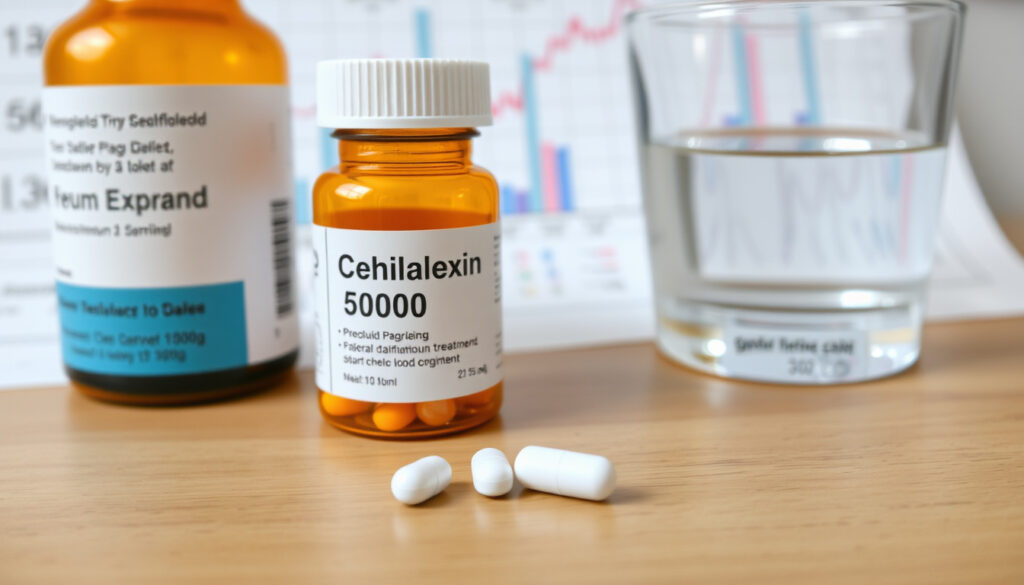
What Is Cephalexin 500 mg Used For? Uses, Dosage, Side Effects
Few medications have been as consistently prescribed for common bacterial infections as cephalexin 500 mg. Used for conditions like strep throat, skin infections, and urinary tract infections, this first-generation cephalosporin is a workhorse in the antimicrobial toolkit, backed by decades of clinical use and formal approval from the U.S. Food and Drug Administration. This guide distills its approved uses, proper dosing, and the side effects you should keep on your radar.
Drug class: Cephalosporin antibiotic (first generation) ·
Common dosage: 500 mg every 6 to 12 hours for adults ·
Typical treatment duration: 7 to 14 days ·
Half-life: Approximately 1 hour ·
Pregnancy category: FDA Category B ·
Most common side effects: Diarrhea, nausea, skin rash (1–10% of patients)
Quick snapshot
- Effective against group A streptococcal pharyngitis (MedlinePlus)
- First-line oral antibiotic for many skin and soft tissue infections (Mayo Clinic)
- Standard adult dose is 500 mg taken 2–4 times daily (U.S. FDA)
- Not effective for viral infections like the common cold (Mayo Clinic)
- Adequacy of cephalexin alone for deep-seated bone infections without surgery (MedlinePlus)
- Optimal treatment duration for uncomplicated UTIs in elderly patients (NHS)
- Standardization of dosage adjustments for mild renal impairment across guidelines (U.S. FDA)
- Role of cephalexin in preventing recurrent infections beyond short-term use (NHS)
- Onset of action within 1 hour of oral dose (MedlinePlus)
- Clinical improvement typically seen within 48–72 hours (Mayo Clinic)
- Full course required even if symptoms resolve early (Mayo Clinic)
- Finish the full prescribed course to prevent resistance (Mayo Clinic)
- Contact your doctor if no improvement after 2–3 days (MedlinePlus)
- Do not take with alcohol; avoid skipping or doubling doses (NHS)
The five facts below capture the core identifier of cephalexin as a prescription drug — from its regulatory history to its branded availability.
| Attribute | Value |
|---|---|
| Year introduced | 1967 |
| FDA approval | 1970 |
| Common brand names | Keflex, Cefanex |
| Available forms | Capsules, tablets, oral suspension |
| Prescription status | Prescription-only (U.S. FDA) |
| Drug class | First-generation cephalosporin |
| Half-life | ~1 hour in adults with normal kidney function (MedlinePlus) |
| Pregnancy category | B (generally considered safe, but only if clearly needed) |
What infections will cephalexin treat?
Cephalexin for skin and soft tissue infections
- Cellulitis, impetigo, and wound infections are common indications. The U.S. FDA label specifically lists skin and skin-structure infections caused by susceptible Staphylococcus and Streptococcus species.
- It is considered first-line oral therapy for mild-to-moderate infections when MRSA is not suspected.
Cephalexin for respiratory tract infections
- Strep throat (group A streptococcal pharyngitis) is a classic target; the FDA recommends at least 10 days of therapy to prevent rheumatic fever.
- It is also used for uncomplicated pneumonia, but not for atypical pathogens like Mycoplasma.
Cephalexin for ear, nose, and throat infections
- Otitis media (middle ear infection) is another approved use, especially in children. The FDA recommends 75–100 mg/kg/day in divided doses for pediatric otitis media.
- Sinusitis is sometimes treated when bacterial aetiology is confirmed.
Cephalexin for bone and joint infections
- Osteomyelitis and septic arthritis may require cephalexin, but deep-seated infections often need surgical debridement and intravenous antibiotics first.
- Oral cephalexin is typically used as step-down therapy after initial IV treatment.
Can cephalexin treat a tooth infection?
- It can be used, but amoxicillin is commonly preferred first-line. Cephalexin is an option for patients with penicillin allergies (though cross-reactivity is possible).
- Guidelines from the Australian Healthdirect include dental abscess as a potential use.
Is cephalexin used during pregnancy?
- It is pregnancy category B — no evidence of harm, but should only be used if clearly needed. The MedlinePlus note advises informing your doctor if you are pregnant or breastfeeding.
Cephalexin for urinary tract infections
- Uncomplicated UTIs in adults are a common indication; typical course is 7 days.
- However, cephalexin may be less effective against gram-negative pathogens compared to other options like nitrofurantoin or trimethoprim-sulfamethoxazole.
Cephalexin excels against gram-positive bacteria, but its narrow spectrum means it may not cover all UTI-causing organisms. For that reason, many clinicians reserve it for cases where culture results confirm susceptibility.
Is cephalexin 500 mg a powerful antibiotic?
How cephalexin compares to other antibiotics
- Cephalexin is considered a moderate-spectrum antibiotic. It is less potent than broader-spectrum drugs like amoxicillin-clavulanate or fluoroquinolones against gram-negatives, but it is highly targeted against common gram-positive bugs.
- It is not effective against MRSA or most gram-negative bacteria, which limits its power in complicated infections.
What types of bacteria does cephalexin kill?
- Primarily gram-positive cocci: Streptococcus pyogenes, Streptococcus pneumoniae, Staphylococcus aureus (methicillin-sensitive only).
- Also some gram-positive anaerobes, but no coverage for Pseudomonas, Enterococcus, or anaerobes in the lower gut.
When your doctor prescribes cephalexin 500 mg, they are betting on a susceptible gram-positive infection. If the infection is caused by a resistant organism, the drug will fail. That is why culture-guided use is critical.
The pattern: cephalexin’s strength is its precision — it hits common gram-positive pathogens hard, but that precision becomes a liability when the infecting organism falls outside its range.
How many days should you take cephalexin 500mg?
Standard treatment courses by infection type
- Strep throat: 10 days (FDA requirement to avoid rheumatic fever).
- Uncomplicated UTI: 7 days typically.
- Skin infections: 7–14 days, depending on severity.
- Osteomyelitis: often 4–6 weeks, including IV and oral phases.
When to stop taking cephalexin
- Always finish the full course even if symptoms improve. Stopping early contributes to antibiotic resistance.
- If no response after 3 days, contact your doctor — the bacteria may be resistant.
The catch: duration varies by infection site, but the rule is universal — stopping early risks resistance, not recovery.
What not to do when taking cephalexin?
Food and alcohol interactions
- Avoid alcohol during treatment; it can increase side effects and reduce effectiveness.
- Take with food to reduce gastrointestinal upset.
Medication interactions with cephalexin
- Metformin: risk of lactic acidosis; monitor kidney function.
- Probenecid: prolongs cephalexin levels (sometimes used intentionally but requires prescription).
- Oral contraceptives: possible reduced efficacy; consider backup method.
Missed dose and overdose instructions
- Take missed dose as soon as remembered unless near next dose — never double up.
- Store at room temperature away from moisture; do not store in bathroom.
What this means: the main risks are mixing alcohol, skipping doses, or ignoring drug interactions — all avoidable with basic awareness.
What are the worst side effects of cephalexin?
Common vs serious side effects
- Common (1–10%): diarrhea, nausea, vomiting, skin rash, yeast infections.
- Serious (rare): anaphylaxis, severe skin reactions, Clostridium difficile diarrhea, seizures (especially with high doses or renal impairment).
When to seek emergency medical help
- Severe diarrhea with blood or mucus, blistering skin rash, difficulty breathing, swelling of face or throat.
Side effects of high doses or multiple daily doses
- Taking 500 mg three times a day can increase GI distress; taking with food helps.
- Renal impairment: doses must be reduced to avoid accumulation and neurotoxicity.
One pattern across all these side effect data: the gastrointestinal system absorbs the heaviest blow. For patients who already struggle with nausea, the trade-off between infection control and tolerability becomes a real conversation with the prescriber.
Six specs define cephalexin’s pharmacological profile — from absorption speed to how it leaves the body.
| Parameter | Value | Source |
|---|---|---|
| Drug class | First-generation cephalosporin | MedlinePlus |
| Bioavailability | Approximately 90% after oral administration | U.S. FDA |
| Peak plasma time | 1 hour after oral dose | MedlinePlus |
| Half-life | ~1 hour in normal renal function | Mayo Clinic |
| Excretion | Renal (glomerular filtration and tubular secretion) | U.S. FDA |
| Protein binding | 6–10% | MedlinePlus |
| Pregnancy category | B | Healthdirect Australia |
Confirmed facts
- Effective for group A streptococcal pharyngitis (strep throat) — U.S. FDA
- First-line oral antibiotic for many skin and soft tissue infections — Mayo Clinic
- Standard adult dose is 500 mg 2–4 times daily — U.S. FDA
- Not effective for viral infections — Mayo Clinic
What’s unclear
- Whether cephalexin alone is sufficient for osteomyelitis without surgical debridement — MedlinePlus
- Optimal duration for uncomplicated UTIs in elderly patients
- Standardized dosing adjustments for mild renal impairment across all guidelines — U.S. FDA
- Full role of cephalexin in long-term infection suppression — NHS
Expert perspectives
Cephalexin is used to treat certain infections caused by bacteria such as pneumonia and other respiratory tract infections.
MedlinePlus (U.S. National Library of Medicine)
Cefalexin is generally used for a short time to treat an infection. It can also be used long-term to prevent infections from coming back.
NHS (UK National Health Service)
The pattern across these sources is clear: cephalexin is a workhorse for acute bacterial infections but not a first-line choice for every scenario. For patients in the U.S. or UK, the choice of cephalexin 500 mg comes down to the specific bug, the infection site, and individual tolerance. The trade-off is straightforward — it works well where it works, but its narrow spectrum means it cannot cover everything. For the typical patient with a susceptible infection, the consequence of sticking to the full course is complete clearance; the consequence of stopping early is resistance and possible return of symptoms. For healthcare providers, the decision to prescribe cephalexin 500 mg rests on a careful balance of microbiology, patient history, and awareness of its limitations.
singlecare.com, youtube.com, safetyandquality.gov.au, ncbi.nlm.nih.gov
Those interested in a more detailed overview of cephalexins uses and dosage can refer to the Vietnamese-language resource for additional context.
Frequently asked questions
Can I drink alcohol while taking cephalexin?
It is recommended to avoid alcohol during treatment; alcohol can increase side effects like nausea and may reduce the antibiotic’s effectiveness.
Is cephalexin safe for children?
Yes, children can take cephalexin at weight-based doses (25–50 mg/kg/day for most infections, divided into 2–4 doses). Always follow pediatric dosing from your doctor.
Does cephalexin interact with birth control pills?
Some antibiotics can reduce the effectiveness of hormonal contraceptives. While data is mixed, using a backup method like condoms during treatment is a prudent precaution.
What should I do if I miss a dose of cephalexin?
Take the missed dose as soon as you remember, unless it is almost time for your next dose. In that case, skip the missed dose and resume your regular schedule. Do not double up.
How should I store cephalexin capsules?
Store at room temperature (68–77°F / 20–25°C) in a dry place away from moisture and light. Do not store in the bathroom.
Can cephalexin be used for a UTI?
Yes, uncomplicated UTIs are a common indication. Typical adult dose is 500 mg twice daily for 7 days, but culture sensitivity should guide therapy.
Will cephalexin cure a sinus infection?
It can be used for bacterial sinusitis, but only if the infection is confirmed to be bacterial (most sinusitis is viral). It may not cover all sinus pathogens.
How long does cephalexin stay in your system?
With a half-life of about 1 hour, it takes roughly 5 hours for the drug to be mostly eliminated from the body. However, active metabolites may persist longer in people with kidney impairment.
More related posts
 Val Kilmer Top Gun: Iceman Role and Full Story
 Floyd Roger Myers Jr. Dies at 42: Fresh Prince Child Actor
 Are Banks Open Today in Ireland? Bank Hours & Holidays 2026
 How Much is Paramount Plus in Ireland? Prices & Deals
 Sammy Steal a Brainrot: Real Name, Net Worth & Contact
 Missouri Star Quilt Company: Free Patterns, Tutorials & Controversy
 Pacers vs Detroit Pistons Match Player Stats – 2024 Box Scores and Key Stats
 Brooklyn Nets vs Houston Rockets Match Player Stats Oct 27, 2025
