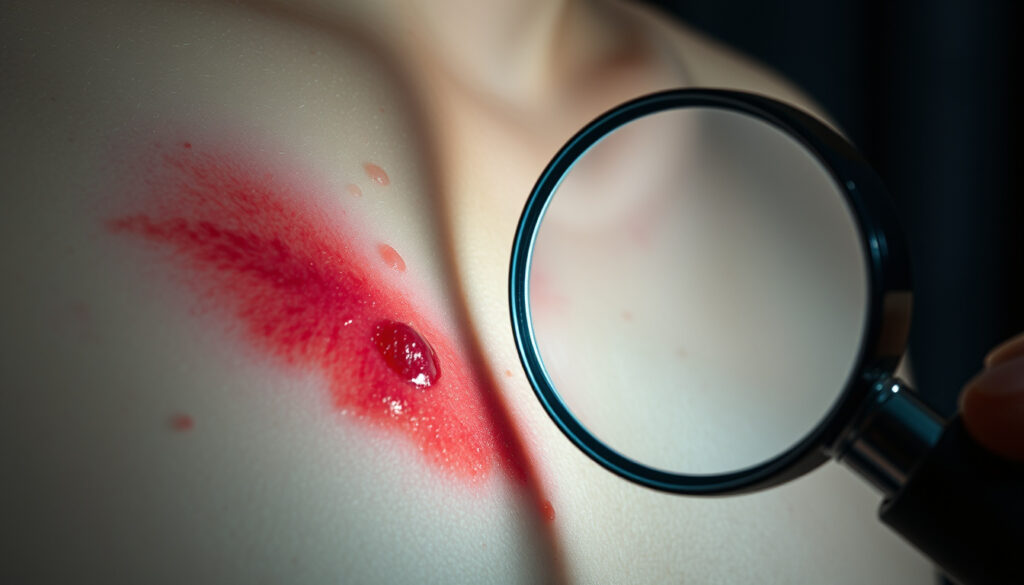
How to Identify Scabies – Burrows, Rash and Night Itch Guide
Scabies is a skin infestation caused by the microscopic mite Sarcoptes scabiei, and recognizing its distinctive signs is essential for early treatment. The condition presents with a unique combination of symptoms that set it apart from common skin conditions like eczema or allergic reactions. Understanding how to identify scabies can prevent prolonged discomfort and reduce the risk of spreading the infestation to others.
The mites burrow into the upper layer of skin, where they lay eggs and trigger an allergic reaction that produces intense itching. This guide provides a comprehensive visual and symptomatic overview to help readers distinguish scabies from other dermatological conditions.
According to dermatologists, the hallmark signs include characteristic burrows, specific rash patterns, and symptom timing that differs from chronic skin conditions. Early recognition allows for prompt medical intervention and effective treatment.
What Does Scabies Look Like?
Visual identification of scabies focuses on three primary elements: the rash appearance, burrow characteristics, and distribution patterns. The mites create distinctive markings that experienced clinicians can often spot during a physical examination.
Red, pimple-like bumps with wavy lines
Intense, especially at nighttime
Thin gray or skin-colored lines
Requires close physical contact
Key Identifying Features
- Burrows appear as thin, irregular wavy lines measuring 2-15mm in length, often grayish or skin-colored
- The rash consists of small red, violet, or brown bumps that may develop into blisters or scales
- Bumps frequently appear in clusters or linear rows where mites have tunneled beneath the skin
- Scratch marks and crusting develop from persistent itching, particularly in advanced cases
- Mites themselves are rarely visible to the naked eye, making burrow identification critical for diagnosis
- Secondary infections may occur from broken skin, especially in elderly or immunocompromised individuals
- The infestation does not resolve without medical treatment, distinguishing it from transient skin reactions
Healthcare providers emphasize that burrows are considered pathognomonic for scabies, meaning their presence essentially confirms the diagnosis. These characteristic tracks form as the mites tunnel through the stratum corneum, the outermost layer of skin.
| Feature | Scabies Characteristic |
|---|---|
| Incubation Period | 2-6 weeks for first exposure; 1-4 days on reinfection |
| Prime Locations | Finger webs, wrists, elbows, waist, genitals |
| Diagnostic Test | Skin scraping with microscopic examination |
| Contagious Status | Yes, transmitted through prolonged skin contact |
| Itch Pattern | Severe, notably worse during nighttime hours |
| Burrow Appearance | Thin, irregular squiggles amid small bumps |
| Rash Evolution | Starts as tiny bumps, progresses to crusty or scaly skin |
| Advanced Stage | Crusted sores from persistent scratching |
Key Symptoms and When They Appear
The Itching Sensation
The itching associated with scabies results from an allergic reaction to the mites, their eggs, and their fecal matter. This reaction typically intensifies significantly during nighttime hours, disrupting sleep for many affected individuals. The sensation often spreads beyond the initially affected areas and may affect household contacts even before visible signs appear on their skin.
According to dermatological sources, the nocturnal worsening of itch occurs because mite activity beneath the skin increases during quiet periods. This characteristic symptom often prompts individuals to seek medical attention after several sleepless nights.
Initial symptoms appear 2-6 weeks after first exposure to scabies mites. However, individuals who have previously had scabies may develop symptoms within 1-4 days of re-exposure due to sensitization.
Early Warning Signs
Early scabies manifestations include subtle itching followed by the appearance of tiny bumps that may be mistaken for insect bites. The rash often begins in localized areas before spreading more widely across the body. Notably, the rash can transmit to others through direct skin contact or by spreading mites through scratching, even before visible lesions become apparent.
Healthcare professionals recommend examining close contacts when scabies is suspected, as multiple household members often develop symptoms around the same time. This pattern of simultaneous onset among close contacts strongly suggests scabies rather than other conditions.
How Do You Know If You Have Scabies?
Clinical Diagnosis Methods
Diagnosis of scabies typically begins with a physical examination by a healthcare provider who will look for characteristic burrows and assess the distribution pattern of the rash. Medical professionals are trained to identify these distinctive markings, particularly in typical locations such as finger webs and wrists. The clinical presentation often provides sufficient evidence for diagnosis, especially when combined with information about potential exposure risks.
When visual confirmation alone is insufficient, doctors may perform a skin scraping procedure. During this test, the physician gently scrapes the surface of a burrow or rash, collecting skin cells that are then examined under a microscope. This examination can reveal the presence of mites, their eggs, or scybala, which are fecal pellets produced by the mites.
According to the Centers for Disease Control and Prevention, skin scraping remains the gold standard for confirming scabies infestation. The procedure involves scraping suspected burrows and examining the material under magnification for mites, eggs, or fecal matter.
When to Seek Medical Evaluation
Individuals experiencing persistent itching, particularly if it worsens at night and affects multiple body areas, should consult a healthcare provider. The Mayo Clinic recommends seeking evaluation if close contacts develop similar symptoms, as prompt treatment prevents further transmission.
Those with compromised immune systems, the elderly, or individuals with extensive skin involvement should seek medical attention promptly due to increased risk of complications. Secondary bacterial infections from scratching can develop into more serious conditions if left untreated.
Scabies vs Other Skin Conditions
Distinguishing Scabies from Eczema
Scabies and eczema share some visual similarities but differ in several critical aspects. Eczema typically presents as chronic, flaky red patches concentrated on the elbows, knees, and neck, whereas scabies affects areas like finger webs, wrists, genitals, and armpits. The presence of burrows is exclusive to scabies and serves as a key differentiating factor.
The onset patterns also differ significantly. Scabies symptoms appear suddenly after exposure and do not resolve without treatment, while eczema follows a chronic pattern of flares and remissions. Additionally, eczema is not contagious, whereas scabies spreads readily through close physical contact.
| Comparison Factor | Scabies | Eczema |
|---|---|---|
| Onset | Sudden, 2-6 weeks post-exposure | Chronic, comes and goes |
| Rash Appearance | Tiny bumps in rows with burrows | Flaky, red/violet patches |
| Itch Timing | Worse at night | Can occur anytime |
| Common Sites | Finger webs, wrists, genitals | Elbows, knees, neck, hands |
| Contagious | Yes | No |
| Burrows Present | Yes | No |
Other Differential Conditions
Bed bug bites produce linear patterns from crawling insects but lack the distinctive burrows seen with scabies. HealthPartners notes that bed bug exposure is typically linked to sleeping areas and furniture rather than direct skin-to-skin contact.
Hives present as raised welts from allergic reactions and typically resolve within hours, unlike persistent scabies infestations that require treatment. Ringworm, another differential, shows characteristic circular bordered lines rather than the irregular tracks produced by scabies mites.
The National Health Service advises that misidentification of skin conditions can delay appropriate treatment. If burrows are visible or if multiple household members develop similar symptoms, scabies should be suspected and medical evaluation sought promptly.
Common Locations of Scabies Rash
Typical Body Areas Affected
Scabies mites prefer warm areas of the body where skin folds create favorable conditions for burrowing. The most commonly affected sites include the spaces between fingers, wrists, elbows, and the waistline. The armpits, buttocks, and genital region also frequently harbor the characteristic rash.
In adults, the rash rarely affects the face or scalp, though these areas may be involved in infants and young children. The Pierre Fabre Eczema Foundation notes that the belly button represents another common site where burrows may be found during examination.
Variations in Different Populations
Infants and young children may develop scabies rashes on the scalp, palms, and soles of the feet, areas less commonly affected in adults. Elderly individuals or those with weakened immune systems may develop crusted scabies, a more severe form involving extensive skin involvement with thick crusts and millions of mites.
In cases of crusted scabies, the infestation becomes highly visible with prominent scaling and crusting, often requiring more intensive treatment protocols. Healthcare providers should be particularly vigilant when evaluating immunocompromised patients, as atypical presentations are common. If you’re looking for more information on identifying scabies, check out this helpful guide: Ont i höger arm orsaker.
Timeline of Scabies Infection
Understanding the progression of scabies helps in recognizing and treating the condition at appropriate stages. The following timeline outlines key milestones from exposure to resolution.
- Day 0: Initial exposure occurs through prolonged skin contact with an infected individual
- Weeks 2-6: First symptoms appear, including initial itching and development of early rash
- During incubation: Mites tunnel beneath skin, creating characteristic burrows
- Symptom progression: Rash evolves from tiny bumps to clusters and rows
- Weeks 4+: Diagnosis confirmed through clinical examination or skin scraping
- Treatment initiation: Prescription scabicide medications applied to affected areas
- Post-treatment: Symptoms gradually resolve over 2-4 weeks; household contacts also treated
What We Know for Certain vs What Remains Unclear
Medical research has established several definitive facts about scabies identification and behavior. Healthcare providers can reliably distinguish scabies from other conditions based on specific clinical features.
| Established Information | Areas of Uncertainty |
|---|---|
| Burrows are pathognomonic for scabies diagnosis | Exact mechanisms of mite avoidance of immune detection |
| Itch significantly worsens at nighttime | Variability in individual immune responses affecting symptom severity |
| Skin-to-skin contact transmits the mites | Role of fomite transmission in low-infestation scenarios |
| Incubation period is 2-6 weeks for first exposure | Factors influencing shorter reinfection timelines |
| Skin scraping confirms diagnosis under microscopy | Optimal scraping techniques to maximize mite detection rates |
Understanding Scabies Transmission and Risks
Scabies results from infestation by the Sarcoptes scabiei mite, a parasitic arthropod that completes its entire life cycle within human skin. The mites burrow into the stratum corneum where females lay eggs that hatch into larvae within 3-4 days. These larvae mature and create additional burrows, perpetuating the infestation cycle.
Transmission requires prolonged skin-to-skin contact, as mites cannot survive away from human skin for more than 2-3 days. The World Health Organization reports that scabies occurs worldwide and disproportionately affects crowded living conditions, making institutional outbreaks common in care facilities, prisons, and childcare settings.
Risk factors include close physical contact, poor hygiene conditions, and compromised immune systems. The condition affects all ethnic groups and age groups equally, though crested scabies predominantly occurs in immunocompromised individuals, the elderly, and those with neurological conditions affecting sensation.
Medical Sources and Expert Guidance
Healthcare organizations worldwide provide authoritative guidance on scabies identification and management. These sources emphasize the importance of clinical examination combined with patient history to establish accurate diagnoses.
“Diagnosis of scabies is made by identifying characteristic lesions and burrows. Skin scrapings examined under the microscope can identify the mite, eggs, or fecal pellets.”
“The burrow is the most characteristic lesion of scabies. It appears as a small, grayish, serpiginous (snake-like) line on the skin surface.”
The National Health Service recommends that anyone suspecting scabies should consult a healthcare professional for proper diagnosis and treatment. Self-diagnosis based on internet images can be unreliable, as various skin conditions present similar appearances.
Next Steps If You Suspect Scabies
If you notice persistent itching, particularly if it intensifies at night, or if you observe characteristic rash patterns on your skin, scheduling a medical appointment is advisable. Early diagnosis allows for prompt treatment, reducing discomfort and preventing transmission to family members and close contacts.
While awaiting medical evaluation, avoid prolonged physical contact with others and refrain from sharing personal items such as clothing, towels, or bedding. Inform household members and close contacts about your symptoms so they can monitor themselves for similar signs.
For more information on maintaining skin health and wellness, explore our comprehensive guides on Garden of Life Probiotics – 2025 Review and Buy’s Guide and Best Smoothie Recipes for Weight Loss – Low-Cal High-Protein Options.
Frequently Asked Questions
What are the most common symptoms of scabies?
The primary symptoms include intense itching that worsens at night, a rash with small red bumps that may appear in rows or clusters, and thin wavy burrows on the skin surface.
Where does scabies rash typically appear?
Common locations include between the fingers, on wrists, elbows, armpits, waist, buttocks, and genital areas. In infants, the scalp, palms, and soles may also be affected.
How long does it take for scabies symptoms to appear?
For first-time exposure, symptoms typically appear within 2-6 weeks. For individuals who have had scabies before, symptoms may develop within 1-4 days due to prior sensitization.
Can scabies be identified by visible mites?
Mites are microscopic and rarely visible to the naked eye. Instead, diagnosis relies on identifying burrows—thin, irregular wavy lines—along with characteristic rash patterns and clinical examination.
How is scabies diagnosed?
Healthcare providers typically diagnose scabies through physical examination identifying characteristic burrows. A skin scraping may be performed and examined under microscopy to confirm the presence of mites, eggs, or fecal matter.
What is the difference between scabies and eczema?
Scabies presents with burrows, sudden onset, and affects genitals and finger webs; eczema causes chronic flaky patches on elbows and knees without burrows and is not contagious.
Is scabies contagious?
Yes, scabies spreads through prolonged skin-to-skin contact with an infected person. It commonly affects household members and close contacts who develop symptoms around the same time.
Does scabies rash look like tracks on skin?
Yes, the characteristic burrows appear as thin, irregular wavy lines or tracks on the skin surface. These grayish or skin-colored lines, typically 2-15mm long, represent mite tunneling beneath the skin.
More related posts
 Packers vs Cowboys Stats: All-Time Record & 2025 Tie
 Best Sushi Near Me: Healthy Options & Safety Tips in Ireland
 Normal Blood Sugar Levels Chart for Adults (mmol/L)
 What Is HTTPS? Meaning, How It Works, Pros & Cons – Complete Guide
 Bankruptcy Lawyers Near Me – Guide to Affordable Local Options
 Renta de Pickups Santo Domingo: Cheapest Prices & Guide
 What Is the Most Common Blood Type – O+ Global Stats and Facts
 Lucy in the Sky Party Dresses: Reviews & Buyer Guide
